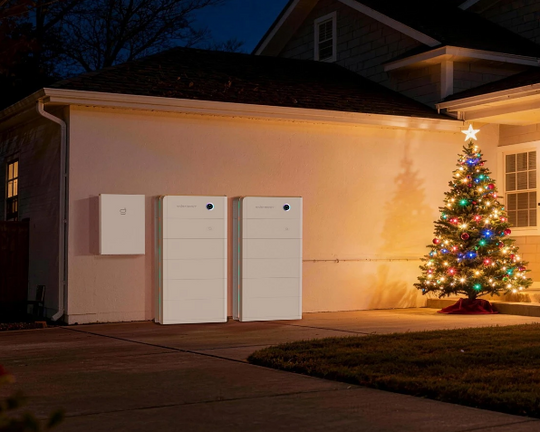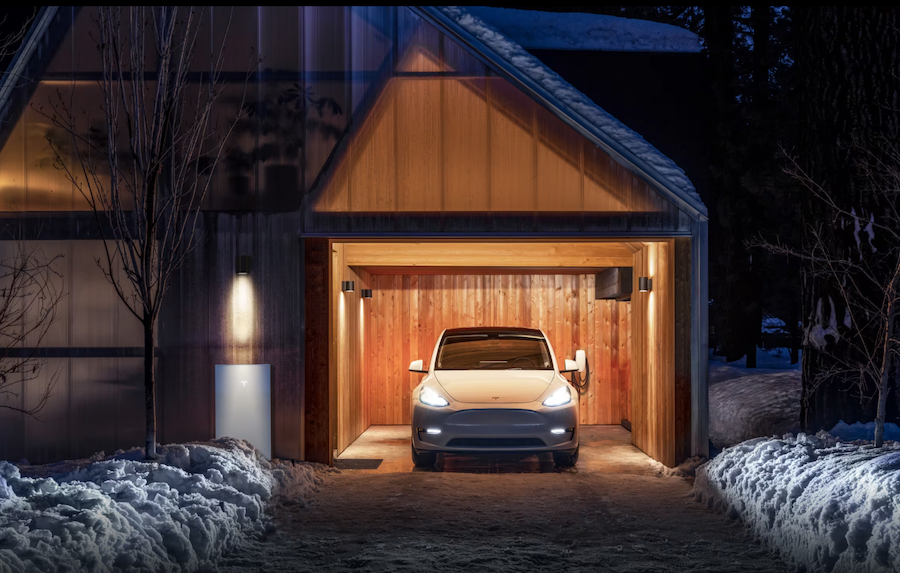
One BAT 9.0 module gives you 8.76 kWh of usable storage. That's enough to keep essential loads running through the night. Add a second module and you double your runtime. A third gets you through 2–3 days without needing solar to recharge. The right Sigenergy battery count depends on what you need to power during an outage — and for how long.
Get it wrong in either direction and you pay the price. Too few modules and you run out of power before the outage ends. Too many and you've paid for storage your home will never use.
One thing most buyers miss: if your solar array produces 40–50 kWh on a typical day, a 2–3 module setup can perform like a 4–5 module system. Solar recharges what you drew overnight. SigenStor battery sizing looks very different once you factor solar in.
This guide walks through home battery sizing for every key variable — backup goal, daily load, solar input, and EV use — to answer how many Sigenergy batteries your home actually needs.
The right Sigenergy battery count comes down to three things:
-
How much energy your home uses each day
-
How long you want to run on battery alone
-
Which loads you need to keep on during an outage
A single BAT 6.0 gives you 6.02 kWh of storage. A single BAT 9.0 gives you 9.04 kWh. Stack up to six modules per controller and you reach 54.24 kWh total.
Start with your backup goal. Your home battery sizing target follows from there.
Start with Your Backup Goal
Before you count kWh, decide what kind of backup you actually want. Most buyers fall into one of these categories:
|
Backup Type |
What It Covers |
Typical Starting Point |
|
Light backup |
Lights, Wi-Fi, phone charging |
1 × BAT 6.0 |
|
Essential loads |
Fridge, lights, Wi-Fi, medical devices |
1–2 × BAT 9.0 |
|
Partial-home backup |
Most circuits, excluding HVAC |
2–3 × BAT 9.0 |
|
Whole-home backup |
All circuits including HVAC |
3–5 × BAT 9.0 |
|
EV-supported |
Whole home + EV charging |
4–6 × BAT 9.0 |
Your goal narrows your range before you run any math.
Estimate Your Daily Home Energy Use
Check your utility bill for your average daily kWh usage. According to the U.S. Energy Information Administration, the average U.S. household used around 10,791 kWh per year (roughly 899 kWh per month, or about 30 kWh per day).
During an outage, you won't run everything. Focus on your critical loads:
-
Refrigerator: ~1.5 kWh/day
-
Lights (LED): ~0.5–1 kWh/day
-
Wi-Fi router: ~0.1 kWh/day
-
Medical devices (CPAP, etc.): ~0.1–0.5 kWh/day
-
HVAC: ~3–6 kWh per cycle
Add up the loads you want to run and multiply by the number of hours or days you want backup coverage. That gives you your kWh battery storage target — the core input for battery sizing.
Choose What You Want to Run During an Outage
Not all home outage backup loads are equal. Some are critical; others are optional.
Prioritize your battery backup loads in this order:
-
Medical devices and refrigeration
-
Lighting and Wi-Fi
-
HVAC (heating or cooling)
-
Well pump or sump pump
-
EV charging
A well pump or sump pump can draw 1–2 kW on startup. HVAC units pull 3–5 kW continuously. If those are on your list, you'll need more modules and a higher continuous output rating.
The BAT 9.0 delivers 4,600W continuous discharge. The BAT 6.0 delivers 3,000W. Stacking modules increases your available output as well as your stored capacity.
Compare BAT 6.0 and BAT 9.0 for Capacity Planning
Both modules use LFP chemistry and carry UL9540 and UL1973 certifications. The key differences in SigenStor battery capacity and power output are:
|
Spec |
BAT 6.0 |
BAT 9.0 |
|
Total capacity |
6.02 kWh |
9.04 kWh |
|
Usable capacity |
5.84 kWh |
8.76 kWh |
|
Continuous discharge |
3,000W |
4,600W |
|
Peak discharge (10s) |
4,500W |
6,900W |
|
Certifications |
UL9540, UL1973 |
UL9540, UL1973 |
If you're building for essential loads only, the BAT 6.0 keeps upfront cost lower. If you're sizing for whole-home or EV use, the BAT 9.0's higher capacity and output give you more headroom per module. Both modules use LFP chemistry, which tolerates frequent partial discharge better than other battery types. Regular cycling at 80% depth of discharge has less impact on lifespan than it would with NMC or lead-acid. Check the product spec sheet for rated cycle count at your target DoD. For a detailed side-by-side, compare SigenStor BAT 6.0 and BAT 9.0.
Example Sigenergy Battery Module Setups
Here are common SigenStor module setup configurations to help you benchmark your own needs:
|
Setup |
Modules |
Total Usable Capacity |
Best For |
|
Light backup |
1 × BAT 6.0 |
5.84 kWh |
Lights, Wi-Fi, phone charging |
|
Essential loads |
2 × BAT 9.0 |
17.52 kWh |
Fridge, lights, CPAP, 1–2 days backup |
|
Extended backup |
3 × BAT 9.0 |
26.28 kWh |
Most circuits, 2–3 days without solar |
|
Whole-home backup |
4–5 × BAT 9.0 |
35–44 kWh |
All circuits including HVAC |
|
EV + home backup |
5–6 × BAT 9.0 |
44–54 kWh |
Whole home and daily EV charging |
Build your Sigenergy battery setup by starting with the configuration closest to your backup goal.
A single Sigen Energy Controller supports up to six modules (54.24 kWh). If your load calculations push beyond that, SigenStor supports up to seven controller stacks in parallel, though most residential setups stay well within a single controller.
How Solar Panels Affect Battery Module Needs
Solar recharge is the most underestimated variable in solar battery sizing. If your panels generate enough to cover daytime use, your battery only needs to cover overnight and outage hours, not full multi-day consumption.
A 10 kW solar array generating 40–50 kWh on a sunny day can fully recharge two to three BAT 9.0 modules in one afternoon. That same recharge cycle means a 2-module setup effectively operates like a 4-module system over a 24-hour period with consistent sun.
With reliable solar input, a 2–3 module setup often handles what would otherwise require 4–5 modules without solar. Size for your worst-case cloudy period, not your best sunny day. As the U.S. Department of Energy notes, solar energy storage acts as an insurance policy for sunshine: charged when solar generation is high and dispatched after sunset or during cloudy periods.
How EV Charging Affects Battery Module Needs
EV charging battery storage demand is the biggest single load most homeowners overlook when sizing.
According to the U.S. Department of Transportation, Level 2 equipment uses 240V service and can charge a battery EV to 80% from empty in 4–10 hours, meaning it runs for the bulk of a night, pulling significant energy from storage. A standard Level 2 EV charger draws 7–11 kW, so charging overnight from battery alone can consume 30–60 kWh, depending on your EV's battery size and state of charge. If your solar array is sized to cover daytime EV charging, SigenStor can be configured to prioritize solar input for solar EV charging, reducing how much of that load falls on battery storage and lowering the module count you need.
If you want to charge your EV from battery storage, plan for at least 4–5 BAT 9.0 modules. If you're considering the Sigen EVDC Charger, add EVDC charging to your system for a V2H/V2G-ready setup that supports 25 kW bidirectional charging.
When to Choose More Battery Capacity
These scenarios call for a larger home backup battery size:
-
Your outages last more than 24 hours
-
You run HVAC, well pumps, or large appliances during outages
-
You have a high daily energy use (30+ kWh/day)
-
You plan to add an EV or expand solar in the next few years
-
You want to maximize time-of-use savings on a utility rate plan
If any of those scenarios apply now or within the next few years, sizing up on the front end costs less than retrofitting later.
Get Help Choosing a Sigenergy Battery Setup
Not sure which configuration fits your home? You can view SigenStor BAT 9.0 or view SigenStor BAT 6.0 to compare specs, or reach out to the Self2Solar team for sizing support.
We can help you choose Sigenergy battery modules that match your loads, solar setup, and outage goals — before you place an order.
FAQs About Sigenergy Battery Sizing
How many SigenStor batteries do I need for whole-home backup?
Most whole-home setups require 3–5 BAT 9.0 modules (27–44 kWh usable), depending on whether you run HVAC during an outage.
Can I mix BAT 6.0 and BAT 9.0 modules?
Yes. SigenStor's modular design supports mixing module types in the same system. Start with a BAT 6.0 and add BAT 9.0 units as your needs grow.
How many hours of backup does one BAT 9.0 provide?
One BAT 9.0 gives 8.76 kWh usable. At ~500W load: roughly 17 hours. At ~1.5 kW essential loads: 5–6 hours. Higher loads shorten runtime.
Do I need more modules if I have solar panels?
Solar recharge reduces overnight draw from storage. With a well-sized array, 2–3 modules can perform like 4–5 in a no-solar system. Still size for cloudy-day scenarios.
What is the maximum SigenStor battery capacity?
Up to six modules per controller: 54.24 kWh. Up to seven stacks in parallel for larger applications.
Does my module count change for grid-tied vs. off-grid use?
Yes. In a grid-tied setup, the utility grid acts as a fallback when your battery is depleted. You're sizing for outage duration and peak load, not total self-sufficiency. Off-grid systems must cover all consumption when solar isn't generating, which typically requires significantly more storage. The module counts in this guide assume grid-tied use with battery backup. If you're sizing for off-grid, contact the Self2Solar team for a custom assessment.
Choose Battery Modules Based on Loads, Duration, and Expansion
The right number of Sigenergy battery modules comes down to what you want to power and for how long.
Start with your backup goal. Estimate your critical loads. SigenStor sizing comes down to matching the BAT 6.0 or BAT 9.0 count to your target runtime, with room to expand.
Browse the full Sigenergy product range at Self2Solar to compare module options and system configurations for your home.