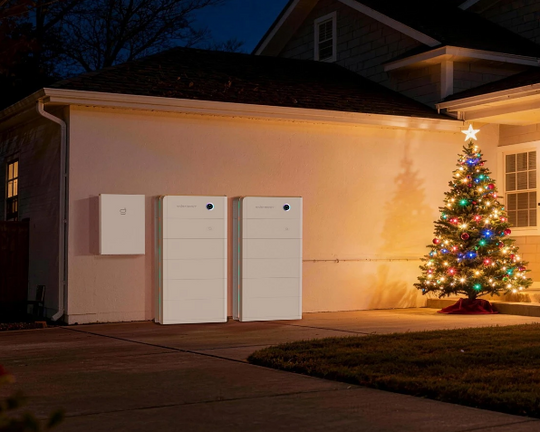
Most people buying a Sigenergy home energy storage system spend 90% of their research time on the battery. That's the wrong starting point.
The battery is one component. Without the Energy Controller, it does nothing. Without the LoadHub, you don't get a backup. The EVDC charger, Power Sensor, and 4G module each unlock a specific capability. None of them matter if you don't know what gap they're filling.
This guide covers every Sigenergy system part: what it does, what specs matter, and which ones you actually need. Because SigenStor is a modular system (not a closed, all-in-one box), you can start with the core three and add components as your goals change.
Overview of the Sigenergy Product Ecosystem
The SigenStor system is modular. That means you build your setup from individual components rather than buying a one-size-fits-all box.
The core system includes:
- The Sigen Energy Controller: the inverter and brains of the system
- One or more SigenStor battery modules (BAT 6.0 or BAT 9.0)
- The Sigen LoadHub: the system gateway and backup power hub
Optional components include:
- Sigen EVDC V2X Charger
- Sigenergy Power Sensor
- Sigenergy 4G Communication Module
- Wall mounting and installation accessories
Understanding how these parts work together helps you configure the right system for your home.
Explore the Sigenergy product ecosystem.
SigenStor Battery Modules
The SigenStor battery modules store the energy your solar panels generate. Both the BAT 6.0 and BAT 9.0 use LFP (lithium iron phosphate) chemistry. LFP delivers 6,000–10,000 cycles compared to 1,000–3,000 for NMC, runs stable at higher temperatures, and carries a lower thermal runaway risk — which is why LFP now accounts for more than 90% of new global storage additions, according to BloombergNEF, 2025. You can start with one module and add more as your storage needs grow. Compare SigenStor battery modules to decide which fits your home.
SigenStor BAT 6.0
The BAT 6.0 gives you 6.02 kWh total capacity (5.84 kWh usable), with 3 kW continuous charge/discharge power (4.5 kW peak for 10 seconds). It carries UL1973 and UL9540 certifications. It's a good fit for smaller homes or households that want to start with a modest storage footprint and expand later.
Both battery modules share the same physical dimensions, so you can mix BAT 6.0 and BAT 9.0 units in the same system. That gives you flexibility as your needs grow.
SigenStor BAT 9.0
The BAT 9.0 delivers 9.04 kWh total capacity (8.76 kWh usable), with 4.6 kW continuous charge/discharge power (6.9 kW peak for 10 seconds), about 53% higher power throughput than the BAT 6.0. It carries UL1973 and UL9540 certifications and is the better fit for larger homes or setups that need faster power cycling.
A single stack can hold up to 56.24 kWh. With seven SigenStor systems in parallel via one LoadHub, total storage reaches up to 379.68 kWh.
Sigen Energy Controller
The Sigen Energy Controller is the required inverter and energy management hub of your SigenStor system. It handles every energy flow decision: solar input, battery charging and discharging, grid interaction, and backup switching.
The standard controller runs at 11.5 kW output and supports up to 23 kW of solar input on a split-phase hybrid setup. It's certified UL1741, UL9540, and CEC listed for use in the US. For the US split-phase installation, the interconnection point requires a dedicated circuit with conductor sizing of at least 8 AWG — your installer will confirm the exact breaker rating based on your panel configuration.
Without the Energy Controller, nothing else in the system works. It is the core unit. Not optional.
View the Sigen Energy Controller
Sigen LoadHub
The Sigen LoadHub is the system gateway that connects your SigenStor setup to your home's electrical panel. It handles backup load management, outage switching, and multi-system coordination. It's what makes whole-home backup possible.
When the grid goes down, the LoadHub switches automatically, with up to 0 ms transfer time. That means your appliances stay on without interruption during the switchover. That matters more than it used to: EIA data shows US customers averaged 11 hours of outage time in 2024, nearly double the average from a decade prior.
The LoadHub also coordinates multiple SigenStor units running in parallel. A single LoadHub manages up to seven SigenStor systems, making it the ceiling component for large whole-home and light commercial installs, not just a residential add-on. All complete SigenStor system bundles sold at Self2Solar include the LoadHub.
Sigen EVDC Charger
The Sigen EVDC is a bidirectional 25 kW DC charger designed for EV owners who want to charge their vehicle directly from their SigenStor system, or use their vehicle as an additional power source.
The EVDC is a V2X charger, meaning power flows in both directions: from the system to your EV, or from your EV back to your home. It comes in two connector variants for the US market: CCS1 (model 11080031) for most non-Tesla EVs including GM, Ford, Rivian, Hyundai, Kia, BMW, and VW, and NACS (model 11080032) for Tesla vehicles. Check the Sigenergy V2X compatibility list to confirm your specific model before ordering. As of 2025, more than 630,000 V2H-capable EVs are on US roads, with around 15 models supporting true vehicle-to-home discharge, including the Ford F-150 Lightning, GM Ultium-platform vehicles (Silverado EV, Blazer EV, Equinox EV), Tesla Cybertruck, and Kia EV9, according to InsideEVs, 2025.
One important limitation: the EVDC is not a standalone unit. It must be paired with a complete SigenStor system that includes at least one battery module. Your EV cannot black-start the discharge. The SigenStor system initiates it.
If you own an EV and want to run charging and vehicle-to-home power through your SigenStor system, the EVDC is the component that makes that connection.
Sigenergy Power Sensor
The Sigenergy Power Sensor monitors your home's real-time energy consumption and feeds that data to the Energy Controller and the mySigen app.
That live feed changes how the system behaves. With consumption data, the controller can decide whether to export excess power or hold it. Without the sensor, the system backs up your whole home during an outage rather than selecting specific loads.
It's not required for the system to function. But the Power Sensor unlocks two specific capabilities: partial-home backup (where the system monitors and prioritizes selected loads during an outage rather than backing up everything) and time-of-use rate optimization (where the controller decides when to charge from the grid versus the battery based on your live consumption data). If either of those scenarios applies to you, the Power Sensor is the component that makes it possible.
View the Sigenergy Power Sensor
Sigenergy 4G Communication Module
The 4G Communication Module lets your SigenStor system connect to the mySigen cloud platform without relying on your home's Wi-Fi. That means remote monitoring, firmware updates, and system alerts reach you even if your local network is down.
It comes with either 2 or 5 years of cellular service included. No separate SIM plan needed out of the box. For installers managing fleets across multiple sites, this is the feature that makes remote diagnostics and firmware pushes practical without dispatching a technician for routine updates.
If you want remote visibility as part of your setup, this module adds that layer.
Which Components Are Required?
Every Sigenergy SigenStor system needs these three components to function:
|
Component |
Role |
|
Sigen Energy Controller |
Manages all energy flows; required inverter |
|
SigenStor Battery Module(s) |
Stores energy; at least one is required |
|
Sigen LoadHub |
System gateway; enables backup and multi-unit parallel |
These three form the foundation of every complete SigenStor setup.
Which Components Are Optional?
These components add capability but are not required for core operation:
|
Component |
When you need it |
|
Sigen EVDC V2X Charger |
You own or plan to own an EV |
|
Sigenergy Power Sensor |
You want partial-home backup, precise real-time energy monitoring, or are on a TOU rate plan |
|
Sigenergy 4G Module |
You want remote monitoring independent of home Wi-Fi |
|
Wall mounting accessories |
Depends on your wall type and installation setup |
Your setup should match your actual energy goals. Not every home needs every component. For mounting hardware and cables, shop Sigenergy accessories.
Example Sigenergy Component Bundles
|
Goal |
Key Components |
Approx. Storage |
|
Basic solar + backup storage |
Energy Controller + 1–3 BAT modules + LoadHub |
6–27 kWh |
|
Whole-home backup |
Energy Controller + 4–6 BAT 9.0 modules + LoadHub |
36–54 kWh (covers most 2,000 sq ft homes running essentials) |
|
EV charging integration |
Full system + EVDC V2X Charger |
Depends on battery stack size |
|
Remote monitoring |
Any full system + 4G Communication Module |
Depends on battery stack size |
Here's how typical setups come together based on common buyer goals:These aren't rigid configurations. The modular design means you can add components over time as your needs change.
FAQs About Sigenergy Components
Do all SigenStor bundles include the LoadHub?
Yes. Complete SigenStor system bundles at Self2Solar include the LoadHub.
Can I mix BAT 6.0 and BAT 9.0 modules?
Yes. Both modules share the same dimensions and can be stacked together in one system.
Does the EVDC charger work without a battery?
No. The EVDC must be paired with a complete SigenStor system that includes at least one battery. The EV cannot initiate discharge on its own.
What's the maximum capacity per stack?
Each SigenStor battery stack supports up to 56.24 kWh (using BAT 9.0 modules at 9.04 kWh each). With seven SigenStor systems running in parallel through one LoadHub, total storage reaches up to 379.68 kWh. That's the maximum configuration for a single LoadHub installation.
Do I need the 4G module if I have Wi-Fi at home?
No. The 4G module is optional and primarily useful where Wi-Fi reliability is a concern or for remote site monitoring.
Build the Right Sigenergy System with the Right Components
The right SigenStor setup starts with three things: the Energy Controller, at least one battery module, and the LoadHub. Add the EVDC charger if you own an EV, the Power Sensor if you're on a time-of-use rate plan, and the 4G module if you need remote monitoring without relying on home Wi-Fi.
Self2Solar carries the full SigenStor component range with free shipping on all system orders. Explore the Sigenergy product ecosystem and build the setup that matches your actual goals.