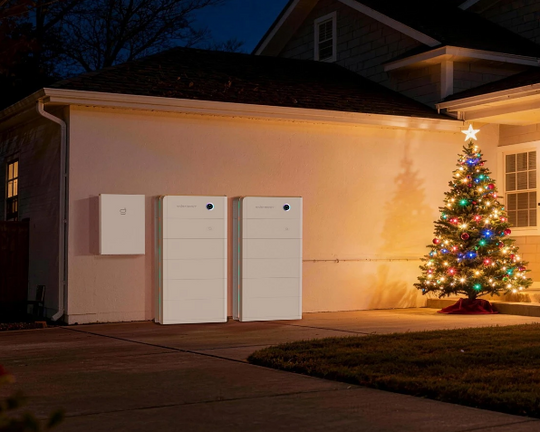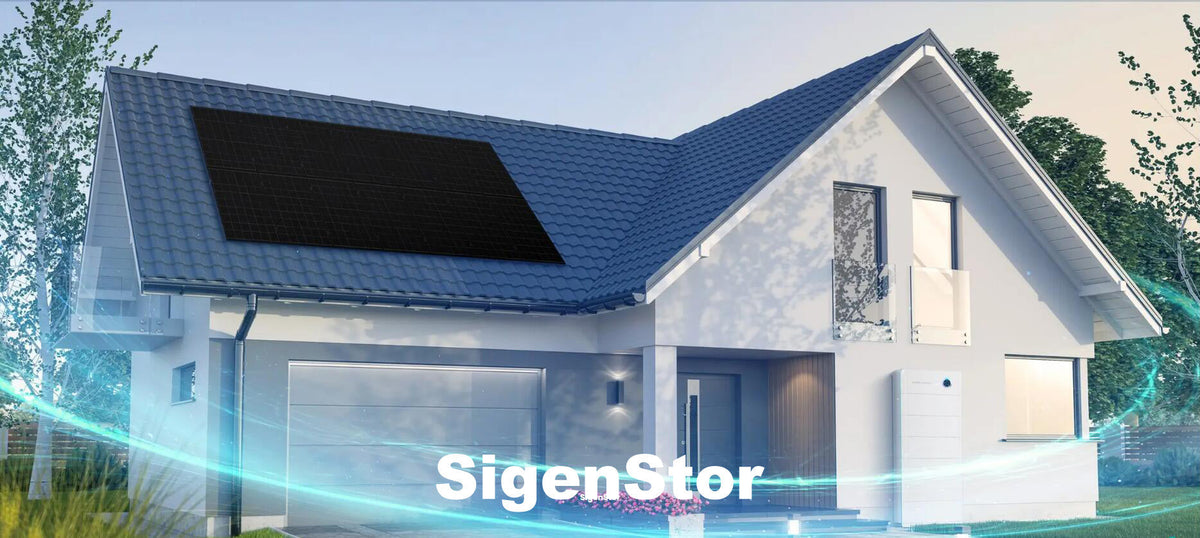
Miss one compatibility check on a Sigenergy system and you're looking at a return, a re-order, or a system that runs below spec. Sigenergy system compatibility depends on your battery selection, solar setup, controller configuration, and whether your EV supports V2X DC charging. The SigenStor works with most residential solar setups via AC coupling, supports whole-home and partial-home backup, and integrates EV charging through the EVDC, but only when paired with the Sigen Energy Controller and the right LoadHub configuration.
Understanding Sigenergy system requirements before you order prevents the most common mistakes. Solar batteries, EV chargers, and whole-home backup systems each add a layer of complexity. Miss one requirement and you're looking at a costly return or a system that doesn't perform as expected.
SigenStor compatibility comes down to four things: battery selection, controller configuration, backup load design, and EV charging setup. Products like the EVDC and LoadHub have specific system dependencies. They don't work standalone. This guide walks you through every Sigenergy compatibility check before you buy.
What Compatibility Means for a Sigenergy System
Sigenergy compatibility isn't just about whether individual Sigenergy compatible products check out. It's about whether your full Sigenergy system setup operates together correctly: batteries, controller, LoadHub, EV charger, monitoring, and your existing solar.
Here's what you're checking:
-
Batteries (SigenStor BAT 6.0 / BAT 9.0): Stackable LFP modules (UL9540, UL1973 certified), each requiring the Sigen Energy Controller to operate. According to SEIA, LFP has become the primary chemistry for stationary home storage, valued for long cycle life and thermal stability.
-
Sigen Energy Controller: The system brain, required for all SigenStor configurations. UL1741 certified and CEC Listed, both required for US grid-tied interconnection.
-
LoadHub: Smart gateway that manages backup loads and enables whole-home backup.
-
EVDC Charger: Bidirectional EV charger. Only compatible with EVs that support V2X DC charging and require the full SigenStor system.
-
Power Sensor / 4G Module: Optional accessories for monitoring and remote connectivity.
-
Solar system: New or existing. DC-coupled or AC-coupled depending on your setup.
Sigenergy Product Compatibility Checklist
Use this Sigenergy checklist to confirm Sigenergy product compatibility before you place an order. SigenStor compatibility depends on every row:
|
Component |
What to check |
|
SigenStor batteries |
Do you need 6.02kWh (BAT 6.0) or 9.04kWh (BAT 9.0) modules? |
|
Sigen Energy Controller |
Included in all SigenStor system bundles. Required. |
|
LoadHub |
Required for whole-home backup and multi-stack systems |
|
EVDC Charger |
Does your EV support V2X DC charging? |
|
Power Sensor |
Do you need external CT monitoring for accurate grid tracking? |
|
4G Module |
Is Wi-Fi unreliable at your install site? |
|
Solar system |
New install (DC-coupled) or retrofit (AC-coupled via third-party inverter)? |
|
Installation site |
Does your electrical panel support the system loads? |
Use this list as your pre-purchase review. Each item is covered in detail below. Review Sigenergy products at Self2Solar to confirm availability before ordering.
Is SigenStor Compatible with Residential Solar Systems?
SigenStor solar compatibility covers both new installations and existing solar retrofits. It supports two integration paths.
New solar installation (DC-coupled): The Sigen Energy Controller acts as the hybrid inverter. Your solar panels connect directly to the SigenStor system. This is the most efficient setup. View the Sigen Energy Controller to confirm specs before ordering.
Existing solar retrofit (AC-coupled): If you already have a string inverter or microinverters, SigenStor can integrate via the LoadHub. According to the U.S. Department of Energy, AC-coupled systems use a bidirectional inverter alongside the existing PV inverter, so your current setup stays in place. Your existing inverter feeds into the LoadHub, and the mySigen app manages the whole system from there.
Both paths are supported. The Sigenergy solar battery system adapts to your existing setup. What changes is your wiring and configuration, not the product itself.
Is SigenStor Compatible with Whole-Home Backup?
Sigenergy whole-home backup is one of the SigenStor's core capabilities, but SigenStor backup compatibility depends on three factors:
-
Battery capacity: More kWh = longer backup runtime. Systems scale from 6.02kWh to 54.24kWh per stack.
-
LoadHub: Required for backup switching. It provides 0ms load-side disruption when switching to backup mode. Your critical loads stay on without interruption. Add LoadHub for backup planning if whole-home coverage is your goal.
-
Load design: Your installer will map which circuits are backed up. Whole-home backup requires sufficient battery capacity to cover your total home load.
The LoadHub also supports generators. If your backup needs extend beyond battery capacity, a generator port is built in.
Is the Sigenergy EVDC Charger Compatible with Your EV?
Sigenergy EVDC compatibility depends on your vehicle's V2X support and your connector type. The EVDC charger is a 25kW bidirectional DC charger that supports V2X (vehicle-to-grid and vehicle-to-home) charging. Compatibility depends on three conditions:
-
Your EV must support V2X DC charging. Not all EVs do. The EVDC comes in two connector versions for the US market: CCS1 (model 11080031) for non-Tesla EVs, and NACS (model 11080032) for Tesla and NACS-compatible vehicles. CHAdeMO is not natively supported. Sigenergy has tested bidirectional compatibility with vehicles including the Ford F-150 Lightning, Hyundai IONIQ 5, Kia EV6, and Rivian R1T, but these are Sigenergy lab results, not OEM-certified V2H pairings. Confirm V2X support with your vehicle manufacturer before purchasing, as bidirectional use may affect your vehicle warranty.
-
The EVDC requires a complete SigenStor system. It cannot operate independently: at least one battery module and the Sigen Energy Controller must be installed.
-
The EVDC is not a standalone Level 2 charger. It integrates with the SigenStor energy management system. If you need a simpler EV charging solution, Self2Solar also carries the PointGuard Level 2 EV Charger, which works with any EV. View the Sigen EVDC Charger for full specs.
Do You Need the Sigen Energy Controller?
Yes. Always.
Sigen Energy Controller compatibility is non-negotiable: it's the core of every SigenStor system. The Sigenergy controller is an 11.5kW, 120/240V split-phase hybrid inverter with up to 23kW PV input capacity. Every SigenStor configuration includes one.
It manages the flow of energy between your solar panels, batteries, grid, and home loads. Without it, the batteries have no way to operate. The controller is what makes SigenStor a full system rather than a collection of parts.
Do You Need the Sigen LoadHub?
If you need whole-home backup or plan to run multiple SigenStor stacks, yes.
Sigen LoadHub compatibility with your system depends on your backup scope. The LoadHub handles backup load management for the full SigenStor stack:
-
Controls up to 5 double-pole loads
-
Enables 0ms backup switching
-
Supports generator integration
-
Manages up to 7 parallel SigenStor stacks (up to 379.68kWh combined)
-
Handles AC coupling for solar retrofits
For partial-home backup on a single stack, you may not need the LoadHub, but most homeowners planning whole-home coverage will.
Do You Need a Power Sensor or 4G Module?
These are optional accessories, but they're worth considering based on your setup.
Sigenergy Power Sensor: An external CT sensor for accurate grid monitoring. If your panel layout makes internal monitoring unreliable, the Power Sensor improves system accuracy. View the Sigenergy Power Sensor
Sigenergy 4G Module: For sites where Wi-Fi signal is weak or unreliable. The PointGuard 4G Communication Module supports 3G/4G connectivity and uses plug-and-play installation. If your install site is a detached garage, outbuilding, or rural property, this module keeps your system connected.
Installation Requirements That Affect Compatibility
Meeting Sigenergy installation requirements is just as important as choosing the right components. SigenStor installation depends on your electrical panel, wall space, connectivity, and local code, not just the hardware you order.
Before your installer arrives, check these:
-
Electrical panel: Does your panel have capacity for the SigenStor system loads? Your installer will assess this.
-
Backup load plan: Which circuits need backup power? Map this out before installation.
-
Wall space: The SigenStor system and battery modules are wall-mounted. Confirm you have adequate clear wall space.
-
Wi-Fi or 4G: System monitoring requires connectivity. If Wi-Fi doesn't reach the install location, plan for the 4G module.
-
Solar setup: New install or retrofit? This affects wiring, controller configuration, and install time.
-
EV charging: If you're adding the EVDC, confirm your EV supports V2X and factor in the additional electrical work.
-
Local code: Permit requirements vary by state and county. Your installer handles this, but it can affect install timeline.
Review Sigenergy installation requirements for additional guidance.
Questions to Ask Before Buying a Sigenergy System
Use this Sigenergy buying checklist before checkout to confirm you're ready to buy Sigenergy system components that match your home:
-
How much backup capacity do I need? (kWh)
-
Do I want whole-home or partial-home backup?
-
Am I retrofitting existing solar or starting fresh?
-
Does my EV support V2X DC charging?
-
Do I need solar monitoring, and how will the system stay connected?
-
Who is installing this, and are they familiar with Sigenergy systems?
-
What are the shipping requirements for my location?
If you're unsure on any of these, Self2Solar's US-based solar advisors can walk you through system sizing and configuration before you buy. Read the Sigenergy buying guide to confirm your configuration before ordering.
FAQs About Sigenergy Compatibility
Got Sigenergy compatibility FAQ questions? Here are the most common SigenStor questions before purchase.
Can I add batteries later?
Yes. You can expand a SigenStor system at any time by adding BAT 6.0 or BAT 9.0 modules up to the 54.24kWh per-stack maximum.
Can I connect multiple SigenStor systems?
Yes. Up to 7 stacks can connect to one LoadHub, reaching a maximum of 379.68kWh combined storage.
Does SigenStor work off-grid?
Yes. The system supports grid-tied, off-grid, whole-home backup, and partial-home backup configurations.
Can I retrofit SigenStor to my existing solar panels?
Yes, via AC coupling through the LoadHub. Your existing string inverter or microinverters connect to the LoadHub, and mySigen manages the full system.
Is SigenStor certified?
SigenStor batteries carry UL9540 and UL1973 certifications. The Sigen Energy Controller carries UL1741 and UL9540, and is CEC Listed. For US grid-tied installations, UL1741 and CEC listing are typically required by local AHJs and utility interconnection agreements. Confirming these before purchase saves permitting delays.
Does SigenStor support VPP?
Yes. The system supports Virtual Power Plant integration with utility company APIs.
Can I use a generator with SigenStor?
Yes. The LoadHub includes a dedicated generator port.
Confirm Your Sigenergy Setup Before Purchase
This Sigenergy compatibility guide covers every factor that determines whether the SigenStor works for your home: battery selection, home setup, backup scope, solar configuration, EV support, and installation site. Each one determines which components you need and how your Sigenergy system setup gets configured.
The SigenStor is one of the most flexible home energy systems on the market, but that flexibility pays off only when the spec matches your actual setup. Run the checklist above, answer the pre-purchase questions, and confirm your configuration before ordering.
Review Sigenergy products at Self2Solar, or contact our US-based solar advisors for pre-sale sizing support.