The inverter you already own decides the answer
If your existing inverter is a hybrid model, add a DC-coupled battery that it was certified with. If it is a standard grid-tie string inverter or a set of microinverters, add an AC-coupled storage system. Choosing the wrong path means either a battery that will not talk to your inverter or a second inverter you did not need.
The two names describe where the battery connects. DC-coupled batteries connect to the solar inverter's DC bus, so panel power charges the battery without being converted to AC first. AC-coupled batteries sit on the AC side with their own inverter, taking power from the house wiring after your existing inverter has already converted it. Everything else in this guide follows from that one difference.
DC-coupled: for homes that already have a hybrid inverter
A hybrid inverter has a battery port built in. Panels feed a DC bus, the battery hangs off that same bus, and one set of electronics handles charging, discharging and the AC output. Adding storage means buying the battery the inverter was listed with, running DC cable and a communication line, and updating a firmware setting.
The pairing is the whole job. High-voltage hybrids such as the Growatt MIN-XH series and Solis S6-EH1P only accept the battery models that appear on their UL 9540 system listing. 48 V hybrids such as the Growatt SPH, Sol-Ark and Deye are more flexible: any 48 V LFP battery with matching RS485 or CAN protocol usually works, and the inverter's compatibility list tells you which.
| Your hybrid inverter | Battery voltage | Compatible batteries we stock |
|---|---|---|
| Growatt MIN 7600–11400TL-XH-US | High voltage | Growatt APX |
| Solis S6-EH1P 7.6K / 10K-H-US | High voltage | Pytes, BYD Battery-Box HVL |
| Growatt SPH 10000TL-HU-US | 48 V | RUiXU, Deye, Growatt ARO/ALP |
| Sol-Ark 12K / 15K | 48 V | Deye, RUiXU, Pytes 48 V |
| FOX H1-US (Hub) | High voltage | FOX ESS ECS HV |
The advantage is efficiency and simplicity: one inverter, one conversion from DC to AC, nothing new to permit except the battery itself. The limitation is that a hybrid inverter without backup capability (some early MIN-XH units, for example) will charge the battery but still shut down when the grid fails.
AC-coupled: for grid-tie string inverters and microinverters
Most solar installed before 2022 used a plain grid-tie inverter with no battery port: SolarEdge SE series, Solis S5, Enphase IQ7 and IQ8 microinverters, Hoymiles HM and HMS microinverters, SMA Sunny Boy, Fronius Primo. None of these can charge a battery directly, and all of them shut off when the grid goes down. AC coupling leaves them in place and adds a second system beside them.
Three components do the work:
- A hybrid or battery inverter that creates its own 120/240 V grid during an outage.
- The battery it is listed with.
- A smart gateway or transfer switch (Sigenergy Gateway, FranklinWH aGate, Growatt SYN, Sol-Ark's built-in transfer) that isolates the house from the utility, moves loads onto the battery inverter, and tells your old solar inverter it still has a grid to feed.
During normal operation your old inverter keeps exporting as before; the new system charges from the surplus on the AC side. During an outage the gateway opens, the battery inverter forms the grid, and your old inverter restarts and keeps producing into the island. The battery inverter uses frequency shifting to throttle the old inverter when the battery is full, which is why not every grid-tie inverter is a good AC-coupling partner: older units that do not support frequency-watt response will simply trip off.
AC coupling is also the only path when you want backup and your hybrid inverter cannot provide it, or when you are adding a second array on a different roof face with its own microinverters.
Efficiency: DC coupling keeps about 5% more of your solar
Every conversion between DC and AC loses 2 to 4%. A DC-coupled battery charges from the panels with one conversion in the charge controller and one on the way out to the house, roughly 94 to 96% round trip. An AC-coupled battery charges from power that was already converted to AC, converts it back to DC to store, then to AC again to use: three conversions, roughly 88 to 91% round trip.
On a home that cycles 15 kWh through the battery every day, the gap is about 0.75 kWh per day or 270 kWh per year. At California's $0.40/kWh peak rates that is around $110 a year. Over a 15-year battery life it is real money, but rarely enough to justify replacing a working grid-tie inverter just to go DC-coupled. The efficiency argument matters most when you are choosing between two new systems, not when retrofitting.
Cost: the DC path is cheaper when it is available
| DC-coupled (hybrid inverter already installed) | AC-coupled (grid-tie inverter stays) | |
|---|---|---|
| Equipment for 10 kWh | $2,400–3,500 battery only | $5,500–8,500 battery + inverter + gateway |
| Equipment for 20 kWh | $4,800–7,000 | $9,500–12,000 |
| New electrical work | DC run, comms cable, battery disconnect | New inverter, gateway, critical-loads or whole-home transfer, AC runs |
| Permit | Battery addition to existing PV permit in most jurisdictions | New ESS permit, often with interconnection update |
| Install time | Half a day | 1–2 days |
| Backup capability | Only if the hybrid inverter supports it | Always, that is what the gateway is for |
| Old inverter | Not needed, you already have the hybrid | Kept, keeps its warranty and production |
If you are starting from zero with no solar at all, neither of these applies: buy a hybrid inverter and battery as one UL 9540 system and skip the retrofit question entirely.
The UL 9540 trap: inverter and battery must be certified together
UL 9540 is a system-level listing. It certifies a specific inverter model with a specific battery model as one energy storage system. A battery that carries UL 1973 and has UL 9540A test data is not, by itself, UL 9540 listed with your inverter. Most inspectors in California, Texas, Florida and New York now ask for the UL 9540 certificate that names both parts, and a mismatched pair fails inspection even when it works electrically.
This bites DC-coupled retrofits hardest. The hybrid inverter you already own was listed with a short list of batteries at the time it was sold, and that list does not grow on its own. Before you buy, check three things:
- The inverter manufacturer's current compatibility list names the battery model and firmware version.
- The UL 9540 certificate (searchable on UL Product iQ) lists your exact inverter model number, not just the series.
- Your AHJ accepts that certificate; a few still require the CEC listing as well.
AC-coupled systems avoid the trap because the new inverter and battery are bought as a matched set. Your old grid-tie inverter sits outside the ESS boundary and only needs its original UL 1741 listing. Our guide to UL 9540 vs UL 9540A vs UL 1973 covers what each certification actually tests.
Which path for your inverter
Find your existing inverter in the left column. Model numbers are on the label on the inverter's side or in the monitoring app.
| Existing inverter | Type | Path | Why |
|---|---|---|---|
| Growatt MIN-XH, Solis S6-EH1P, FOX H1, Sol-Ark, Deye, Growatt SPH | Hybrid with battery port | DC-coupled | Add the listed battery; backup works if the inverter has an EPS/backup port |
| Growatt MIN-X, MIC, MOD (no XH suffix) | Grid-tie, no battery port | AC-coupled | No way to charge a battery directly |
| Solis S5, S6-GR1P | Grid-tie | AC-coupled | Same |
| SolarEdge SE3000H–SE11400H | Grid-tie with optimizers | AC-coupled | SolarEdge's own battery requires their Energy Hub inverter; third-party storage goes AC-coupled |
| Enphase IQ7 / IQ8 microinverters | Micro, grid-tie | AC-coupled | IQ8 can island with Enphase's own system; any other battery is AC-coupled through a gateway |
| Hoymiles HM / HMS / HiFlow microinverters | Micro, grid-tie | AC-coupled | Pairs well with Sigenergy or FranklinWH gateways |
| SMA Sunny Boy, Fronius Primo, ABB/FIMER | Grid-tie | AC-coupled | Check frequency-watt support on units older than 2017 |
| Any inverter older than 2015 | Grid-tie | AC-coupled, or replace | Pre-UL 1741-SA units may not throttle correctly when islanded |
If your model is not listed, email a photo of the inverter label to PrimeService@self2solar.com and we will tell you which path it takes.
Recommended builds
DC-coupled, you own a Growatt MIN-XH: add Growatt APX modules in 5 kWh steps. A 20 kWh APX stack with the SYN 200 backup box turns the MIN into a whole-home backup system; the complete kit is $10,476 if you are also replacing the inverter.
DC-coupled, you own a 48 V hybrid (SPH, Sol-Ark, Deye): RUiXU Lithi2-16 gives 16 kWh in one outdoor-rated cabinet for $2,974, or stack 5.12 kWh rack modules from $1,059 each.
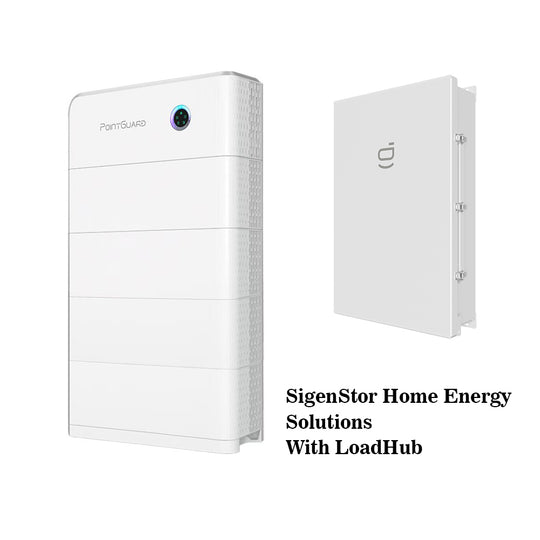
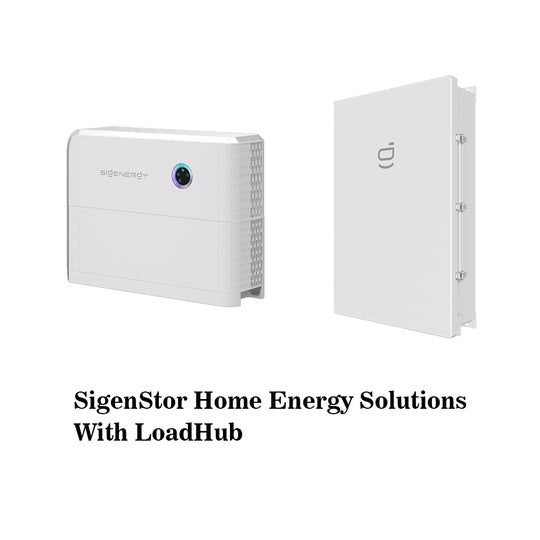
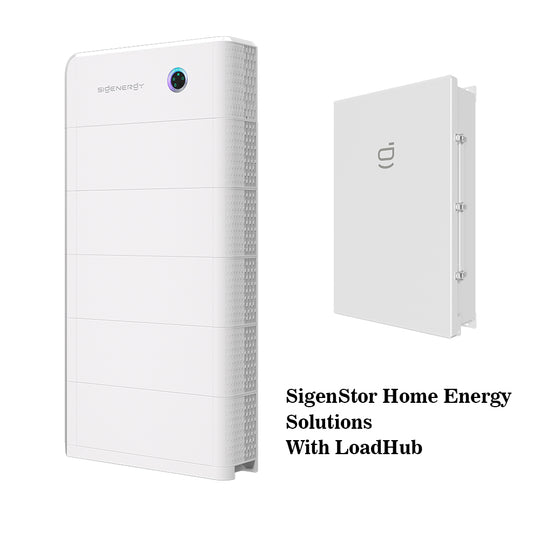
AC-coupled, existing solar stays: FranklinWH aPower 2 + aGate is the simplest install, 15 kWh and whole-home transfer in two boxes, from $11,379. Sigenergy SigenStor with the Gateway is the better pick if you also want EV charging or plan to add more solar later, from $9,797 for 11.5 kW / 18 kWh.
All AC-coupled retrofit options are in one place: Battery Systems for Existing Solar.