If you have a grid connection, you want hybrid
A hybrid system uses the grid as a free, unlimited backup and only draws on the battery when it is cheaper or when the grid is down. An off-grid system has no grid and must carry every load on its own, through the worst week of the year. For a home with utility service, hybrid costs less, needs less battery, and does everything off-grid does except pretend the grid is not there. Off-grid is the right answer when there is no grid or when connecting to it costs more than the extra batteries.
| Grid-tied | Hybrid | Off-grid | |
|---|---|---|---|
| Grid connection | Required | Required | None |
| Battery | None | 10–30 kWh | 20–60 kWh |
| Power during an outage | None, shuts down | Yes, from battery and solar | Yes, always |
| Sells excess to utility | Yes | Yes | No |
| Sized for | Annual bill offset | Night + outage | Worst sunless stretch |
| Backup generator | No | Optional | Strongly recommended |
| Typical equipment cost, 10 kW array | $9,000–12,000 | $20,000–28,000 | $28,000–40,000 |
How a hybrid system behaves
A hybrid inverter has three ports: solar in, battery in and out, and a grid connection. On a normal day it routes solar to the house first, charges the battery with the surplus, and exports whatever is left. In the evening it runs the house from the battery and only pulls from the grid when the battery hits its reserve. When the grid fails, a transfer relay inside the inverter (or an external gateway) opens within about 20 milliseconds, and the house keeps running on battery and solar without a flicker.
Why hybrid is now the default in California and other NEM 3.0 states. Under net billing, exported solar earns $0.03 to $0.08/kWh while imported evening power costs $0.35 to $0.55/kWh. Exporting is nearly worthless; shifting your own solar into the 4 to 9 pm window is where the money is. A hybrid system with 10 to 15 kWh of battery captures most of that shift. The same logic applies anywhere with time-of-use rates, demand charges, or a utility that has cut its net-metering credit.
The battery also sets how much backup you get. A 10 kWh bank covers a critical-loads panel overnight. A 20 to 30 kWh bank covers most of the house. The sizing guide walks through the math.
How an off-grid system is designed
With no grid, the design question flips from "how much do I want to offset" to "what is the worst stretch I must survive." Three rules follow:
- Size the battery for days of autonomy, not one night. The standard is two to three days of full load with no sun, which means 2.5 to 3 times the storage a hybrid home of the same size would buy. A cabin using 15 kWh a day needs 40 to 45 kWh of usable battery.
- Oversize the array for winter. A 10 kW array that makes 55 kWh in June may make 18 kWh in December in the northern half of the US. Off-grid arrays are sized to the worst month, so they are typically 30 to 50% larger than a hybrid array for the same loads.
- Plan for a generator from day one. A propane or diesel generator on the inverter's generator input covers the week-long storm that no reasonable battery bank can. It also lets you buy less battery. Most off-grid inverters can auto-start a generator when the battery hits a set level.
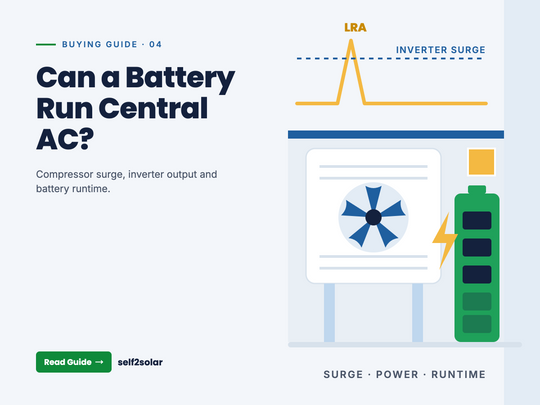
Off-grid systems also need a load strategy. Electric water heating, resistance space heating and central AC are the first things off-grid designers remove, replacing them with propane, heat pumps or mini-splits. The cheapest kWh is the one you do not have to store.
Hybrid inverters vs off-grid inverters
The two inverter families look alike and are often sold by the same brand, but they are built to different rules.
| Hybrid inverter | Off-grid inverter | |
|---|---|---|
| Grid connection | Yes, with UL 1741-SB anti-islanding and utility-approved export control | None, or input-only (will not export) |
| Certifications needed | UL 1741, UL 9540 as a system with its battery, CEC listing for interconnection | UL 1741 for safety; no interconnection approval needed |
| Surge capacity | Typically 1.5–2× rated for 10 s | Typically 2–3× rated; built for motor starts with no grid to help |
| Generator input | Some models | Nearly all, usually with auto-start |
| Battery chemistry support | Lithium with BMS communication | Lithium and lead-acid, often with manual charge profiles |
| Price per kW | $160–260 | $130–200 |
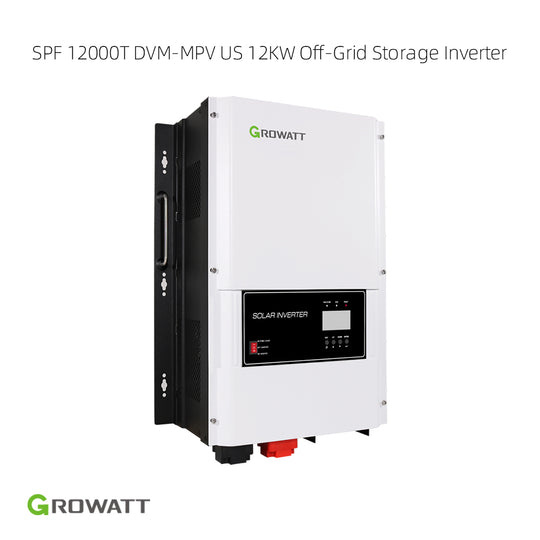
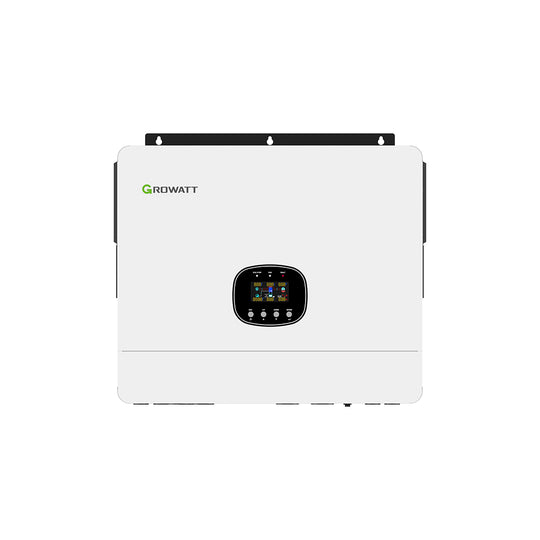
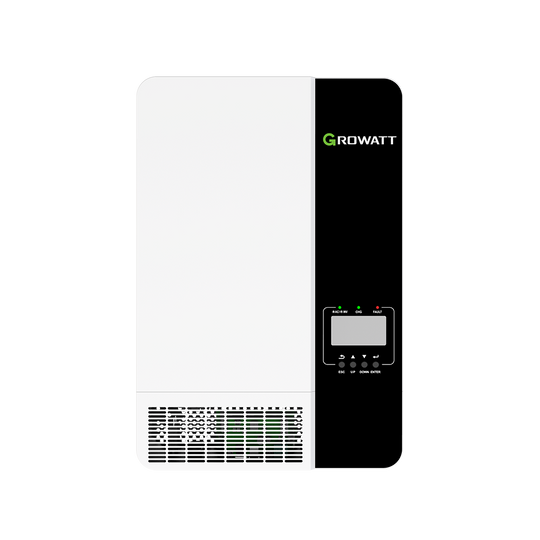
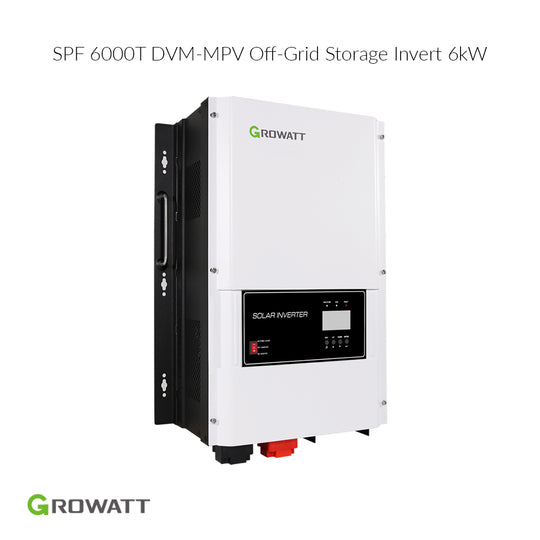
| Examples we stock | Growatt SPH 10K, FOX H1-11.4, Solis S6-EH1P, Hoymiles HYS | Growatt SPE12000, all off-grid inverters |
The practical difference: an off-grid inverter cannot be permitted for grid connection, so you cannot start off-grid and later tie in without replacing it. A hybrid inverter can do both, which is why hybrids cost more.
Cost: the same 10 kW array, two ways
Equipment prices below are Self2Solar list prices in October 2026, before the 30% federal credit where it still applies. Installation, racking, wire and permits are extra and similar for both.
| Component | Hybrid, grid-connected | Off-grid, no grid |
|---|---|---|
| Solar panels | 10 kW, about $3,100 at $0.31/W | 13 kW (winter-sized), about $4,000 |
| Inverter | 11.4 kW hybrid, $1,700–2,800 | 12 kW off-grid, $1,770 |
| Battery | 20 kWh, $4,800–7,000 | 45 kWh, $8,500–13,000 |
| Backup gateway / transfer | $600–1,500 | Not needed |
| Generator + auto-start | Optional | 10–14 kW propane, $2,500–4,500 |
| Interconnection and utility fees | $200–800 | None |
| Equipment total | $10,400–15,200 | $16,800–23,300 |
The gap is almost entirely battery. Off-grid buys 2.5 times the storage to cover days instead of nights, and adds a generator to cover what the battery still cannot. If a utility line extension to your property quotes under $20,000, grid-connected hybrid is usually cheaper over ten years once you count battery replacement.
Which one is yours
Choose hybrid if:
- You have utility service and want outage protection without buying days of battery.
- You are on NEM 3.0, time-of-use rates, or a utility with low export credits, and the goal is to use your own solar at night.
- You may add an EV, a heat pump, or more panels later and want one system that grows with the house.
Choose off-grid if:
- There is no grid at the site, or the line-extension quote is more than $20,000 to $30,000.
- The property is a seasonal cabin, remote workshop, well site, or agricultural building where a generator already runs.
- You are willing to manage loads: propane for heat and hot water, high-efficiency appliances, no resistive heating.
Choose grid-tied with no battery if: your utility still pays full retail for exports, outages are rare, and your only goal is a lower bill. That is a shrinking group, but it exists.
Can a hybrid inverter run off-grid?
Yes, with limits. Most hybrid inverters have an off-grid or EPS mode that forms its own 120/240 V grid from battery and solar with no utility present. The SigenStor, Sol-Ark, Deye and Growatt SPH all do this well and are used on true off-grid sites every day. Three things to check before you rely on it:
- Surge rating. Hybrids are rated for grid-assisted starts. Confirm the inverter's off-grid surge covers your largest motor without the grid.
- Generator input. Not every hybrid has a generator port or auto-start. The Growatt SPH and Sol-Ark do; several high-voltage hybrids do not.
- Lead-acid support. If you plan to use lead-acid for cost reasons, most current hybrids will not charge it properly. Stay with LFP.
The reverse is not true: an off-grid inverter cannot be connected to the grid. If there is any chance the site gets utility service later, buy a hybrid.
Recommended kits
Hybrid, most homes: SigenStor 11.5 kW / 18 kWh, $9,797. One stack, whole-home transfer, EV charging ready. Add panels from the residential panel collection.
Hybrid, best value: Growatt 20 kWh whole-home kit, $10,476. MIN 11.4 kW inverter, 20 kWh APX battery, SYN 200 backup box.
Hybrid, 48 V and generator-ready: Growatt SPH 10K ($2,787) with two RUiXU 5.12 kWh rack batteries ($1,059 each). Works off-grid too.
Off-grid, cabin or workshop: Growatt SPE12000 ($1,769) with a RUiXU Lithi2-16 16 kWh outdoor battery ($2,974); add a second Lithi2 for a full-time residence.
All kits: Hybrid Solar Kits and Off-Grid Solar Kits.