Yes, if three numbers line up
A home battery system can run central air conditioning, including a 5-ton unit, through an entire night. Most systems that fail at it were sized for the fridge and lights and asked to do more. The AC has to pass three checks:
- Surge. The inverter's peak rating must exceed the compressor's starting current, or the inverter trips the moment the thermostat calls for cooling.
- Continuous power. The inverter and battery together must deliver the AC's running watts plus everything else that is on.
- Energy. The battery must hold enough kWh for the hours of cooling you want, which is the check most people skip.
The rest of this guide puts numbers on each one.
What a central AC actually draws
Two numbers matter and they are on the unit's data plate. RLA (rated load amps) is the running current. LRA (locked rotor amps) is the starting current, which lasts a fraction of a second but is what the inverter has to survive. Multiply amps by 240 V to get watts.
| AC size | Cooling capacity | Running (RLA) | Running watts | Starting (LRA) | Starting watts |
|---|---|---|---|---|---|
| 2-ton | 24,000 BTU | 9–12 A | 2,200–2,900 | 50–70 A | 12,000–17,000 |
| 3-ton | 36,000 BTU | 13–16 A | 3,100–3,800 | 70–95 A | 17,000–23,000 |
| 4-ton | 48,000 BTU | 17–21 A | 4,100–5,000 | 95–120 A | 23,000–29,000 |
| 5-ton | 60,000 BTU | 21–26 A | 5,000–6,200 | 115–150 A | 28,000–36,000 |
Those starting numbers are for single-stage units built before about 2018 with a standard capacitor start. They are why a 12 kW inverter with a 20 kW surge rating can still trip on a 3-ton unit. Add the air handler's blower (400 to 800 W, with its own smaller surge) and anything else running in the house.
The practical rule: without a soft starter, plan for 5 to 6 times running watts at start. With one, plan for 1.5 to 2 times.
Inverter surge ratings
Surge ratings are quoted at different durations and are not directly comparable across brands. The 10-second number is the one that matters for a compressor start.
| Inverter | Continuous | Surge (10 s) | Runs 3-ton without soft start | Runs 5-ton with soft start |
|---|---|---|---|---|
| Sigenergy SigenStor 11.5 kW | 11.5 kW | 17.1 kW | Marginal | Yes |
| Growatt SPH 10000TL-HU-US | 10 kW | 20 kW | Yes | Yes |
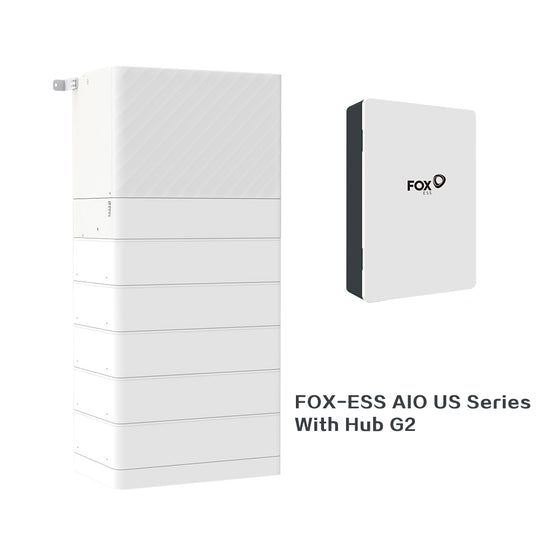
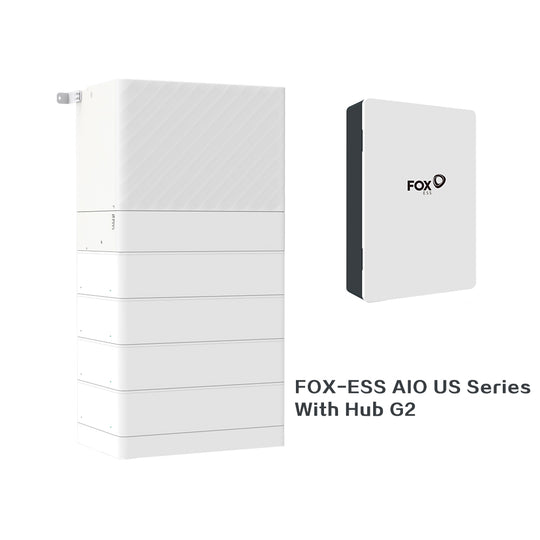
| FOX H1-11.4-US | 11.4 kW | about 2× | Marginal | Yes |
| Growatt MIN 11400TL-XH-US | 11.4 kW | about 1.5× | No | Yes |
| Solis S6-EH1P10K-H-US | 10 kW | about 1.5× | No | Yes |
| Hoymiles HYS-11.5LV-USG1 | 11.5 kW | about 2× | Marginal | Yes |
| Growatt SPE12000 (off-grid) | 12 kW | 36 kW | Yes | Yes |
"Marginal" means it starts a healthy unit on a mild day but may trip on a hot afternoon with a worn compressor. For anything 4 tons and up, assume a soft starter is part of the system. Two inverters in parallel double the surge capacity and are the standard answer for homes with two AC units.
Soft starters: the $300 part that saves a $2,000 inverter upgrade
A soft starter is a small box wired to the compressor that ramps the motor up over about half a second instead of slamming full voltage onto it. It cuts the starting current by 60 to 75%. A 5-ton unit with a 130 A LRA starts at about 35 to 50 A with one installed, which is 8 to 12 kW instead of 31 kW.
Install one when any of these is true:
- The AC is 4 tons or larger.
- The inverter's 10-second surge is less than 5 times the compressor's running watts.
- You plan to run the AC on battery with other loads already on.
- The system will run on a generator through the inverter; generators hate LRA even more than inverters do.
Micro-Air EasyStart and Hyper Engineering SureStart are the two brands most installers use; both cost $250 to $400 and take an HVAC tech about an hour. They also reduce wear on the compressor and the lights no longer dim when the AC kicks on, so most owners keep them even after the battery decision is made. Variable-speed and inverter-driven AC units do not need one; their electronics already ramp the motor.
Runtime: the number most people get wrong
Starting the AC is a one-second problem. Running it for eight hours is a kWh problem, and it is the one that empties batteries.
A 4-ton unit draws about 4.5 kW while the compressor runs. On a 95 °F afternoon it runs 60 to 80% of the time; overnight at 78 °F it runs 30 to 50%. That gives:
| Scenario | Average draw | 8 hours | 12 hours |
|---|---|---|---|
| 4-ton, hot afternoon, 70% duty | 3.2 kW | 25 kWh | 38 kWh |
| 4-ton, overnight, 40% duty | 1.8 kW | 14 kWh | 22 kWh |
| 3-ton, overnight, 40% duty | 1.4 kW | 11 kWh | 17 kWh |
| Rest of house (fridge, lights, fans, internet) | 0.6 kW | 5 kWh | 7 kWh |
A 10 kWh battery runs a 4-ton AC overnight for about four hours before it hits reserve. A 20 kWh battery gets through a mild night with the rest of the house still on. Running the AC through a full hot day with no solar takes 30 kWh or more, which is why that case is usually handled by solar, not by buying more battery.
Set the thermostat two or three degrees higher during an outage and pre-cool the house in the afternoon while solar is strong. Both cut overnight battery use by 20 to 30%.
Solar turns a four-hour battery into an all-day system
The hours when AC load is highest are the hours when solar output is highest. A 10 kW array on a clear summer day produces 6 to 8 kW through midday, which covers a 4-ton AC at 70% duty with a margin left to charge the battery. The battery only has to carry the evening and night, which cuts the required capacity roughly in half.
With solar in the loop, a realistic hot-day cycle looks like this: morning on battery, 9 am to 5 pm on solar with the battery refilling, evening and overnight on a full 20 kWh bank. A system with that profile can ride out a multi-day summer outage indefinitely as long as the weather holds. Without solar, the same battery is a one-night solution and the honest answer to running AC for days is a generator on the inverter's generator input.
Variable-speed AC, heat pumps and mini-splits change the equation
If you are replacing the AC anyway, pick equipment that is built for battery power:
- Inverter-driven (variable-speed) central AC and heat pumps ramp the compressor electronically. Starting current is barely above running current, so the surge problem disappears, and they modulate down to 30 or 40% output instead of cycling on and off, which cuts kWh by 20 to 40%.
- Ductless mini-splits draw 600 to 1,500 W per zone and start softly. Cooling two bedrooms overnight on a mini-split costs 5 to 8 kWh instead of 15 to 20 kWh for whole-house central air.
- DC-input and solar-direct mini-splits from several HVAC brands run straight off a 48 V battery or a dedicated panel string, skipping the inverter altogether.
For a home that keeps its single-stage central unit, the practical compromise is a soft starter plus one mini-split in the main bedroom, so overnight cooling never has to come from the big compressor.
Load hubs: let the system shed the AC automatically
A smart load hub puts selected circuits on controllable breakers and lets the inverter or an app decide what stays on when the battery runs low. The AC, water heater and EV charger go on managed circuits; the fridge, lights and internet stay on always-on circuits. When the battery drops to a set level, the AC circuit opens, the critical loads keep running, and the AC comes back when solar recovers in the morning.
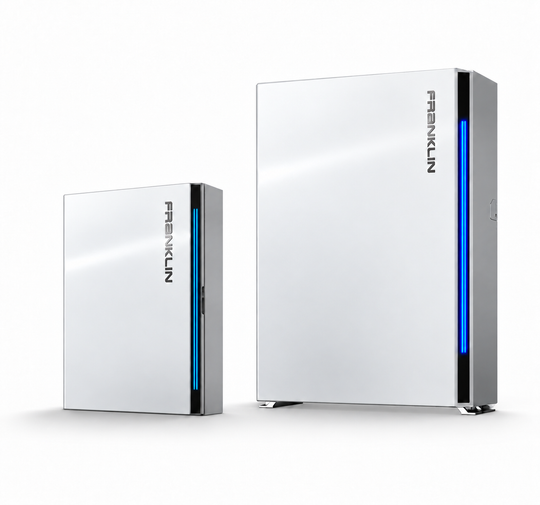
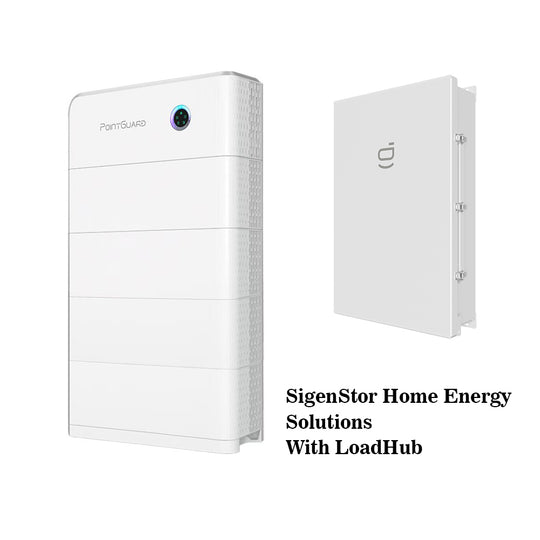
The Sigenergy LoadHub (included with SigenStor home systems), the FranklinWH aGate's smart circuits, and the Growatt SYN 200 all do this, and all of them also hold the AC off for the first minute after a transfer so the compressor never tries to start while the inverter is still settling. Without a load hub, the alternative is a manual critical-loads panel with the AC left off it, which protects the battery but means no AC during an outage at all.
The smallest build that runs a 4-ton AC overnight
| Component | Pick | Why | Price |
|---|---|---|---|
| Inverter + battery | SigenStor 11.5 kW / 18.08 kWh | 17.1 kW surge clears a soft-started 4-ton; 18 kWh covers a 40%-duty night plus the house; LoadHub sheds the AC at low battery | $9,797 |
| Soft starter | Micro-Air EasyStart 364 or Hyper SureStart | Cuts a 110 A LRA to about 35 A | $300 installed |
| Solar | 10 kW, ZNSHINE 440 W pallet covers it with spare | Carries the daytime AC load and refills the battery | $4,780 |
| Expansion | One more 8 kWh SigenStor module | Takes you from a mild night to a hot one | About $3,000 |
The same result on a 48 V platform: Growatt SPH 10K ($2,787) with its 20 kW surge, four RUiXU 5.12 kWh rack modules ($4,236) for 20 kWh, and the same soft starter. Lower cost, more wiring, no automatic load shedding unless you add a relay.