Four standards, four different things
UL 9540 is the one your permit depends on. It certifies a specific inverter and a specific battery as one tested energy storage system. UL 1973 covers only the battery, UL 9540A is a fire-propagation test rather than a certification, and UL 1741 covers only the inverter. A battery advertised as "UL certified" may carry any one of these, and only one of them gets you through inspection on its own.
| Standard | Applies to | What it is | Who asks for it |
|---|---|---|---|
| UL 1973 | Battery module or cabinet | Safety listing for the battery as a component: electrical, mechanical, BMS | Required inside UL 9540; sometimes accepted alone for off-grid or RV |
| UL 9540A | Battery cell, module, unit, installation | A test method that measures whether a thermal runaway spreads; produces a report, not a pass/fail listing | Fire marshals and AHJs, to set spacing and location rules |
| UL 9540 | Inverter + battery as a system | Listing of a named inverter model with a named battery model as one ESS | Building inspectors for any grid-connected or indoor ESS permit |
| UL 1741 (-SA, -SB) | Inverter | Grid-interactive inverter listing; SA and SB add the grid-support functions utilities require | Utility interconnection, and as a prerequisite inside UL 9540 |
UL 1973: the battery on its own
UL 1973 is the component standard for stationary batteries. A listed battery has been tested for overcharge, over-discharge, short circuit, crush, drop, vibration, thermal cycling, and the behavior of its battery management system when a cell goes out of range. It is the standard that tells you the battery will not hurt anyone when it is working as designed, and will shut itself down when it is not.
What it does not cover is just as important:
- It says nothing about the inverter. A UL 1973 battery wired to an inverter it has never been tested with is an unlisted system.
- It does not test what happens when a cell does go into thermal runaway. That is UL 9540A's job.
- It does not satisfy NEC 706 or the IRC/IFC energy-storage sections by itself. Those codes reference UL 9540 for the system.
Every battery we sell carries UL 1973. The question an inspector will ask is what it is listed with.
UL 9540A: a fire test, not a certificate
UL 9540A is a test method. A lab forces one cell into thermal runaway and measures whether it spreads to the next cell, the next module, the next unit, and whether the gases released are flammable. The output is a test report with numbers, not a listing. A product cannot "be UL 9540A certified"; it can only have been tested to UL 9540A, with results that are either good or bad.
The report is what fire marshals and AHJs use to decide where the battery can go. Under IFC 2021 and NFPA 855, a residential ESS with favorable 9540A results can be installed closer to other units, inside a garage, or on an exterior wall near a window. Poor results, or no test at all, trigger the default rules: 3 ft between units, a maximum of 40 kWh per location, and more restrictive placement.
Two things to know when you read a manufacturer's claim:
- "UL 9540A tested" without a summary of results tells you nothing. Ask for the unit-level or installation-level test summary.
- A 9540A report for the cell or module does not transfer to a different cabinet. The test is repeated at each level of assembly.
UL 9540: the system listing your permit depends on
UL 9540 certifies an energy storage system: a named inverter (or power conversion system) together with a named battery, tested as the unit they will be installed as. The certificate lists both model numbers. If your inverter and battery do not appear together on a UL 9540 certificate, the combination is not listed, no matter what each part carries on its own.
This is the standard NEC 706.5 and the residential codes point to, and it is what inspectors in California, Texas, Florida, Arizona, New York and most other states now require for any grid-connected ESS, and for indoor installations regardless of grid connection.
The consequences for how you shop:
- All-in-one systems (Sigenergy SigenStor, FOX ESS PowerQ, FranklinWH) are sold as one 9540-listed product. Nothing to match.
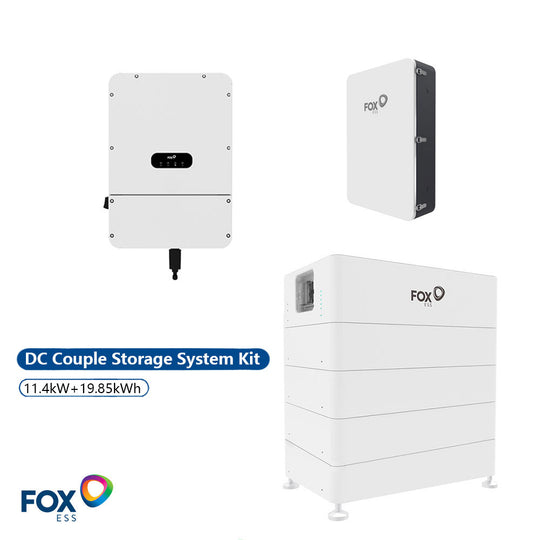
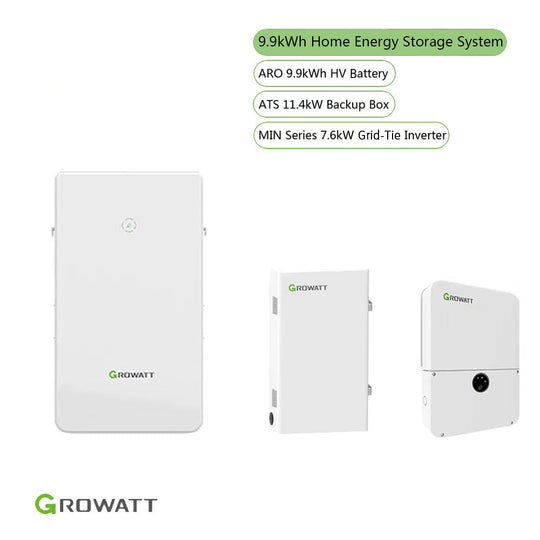
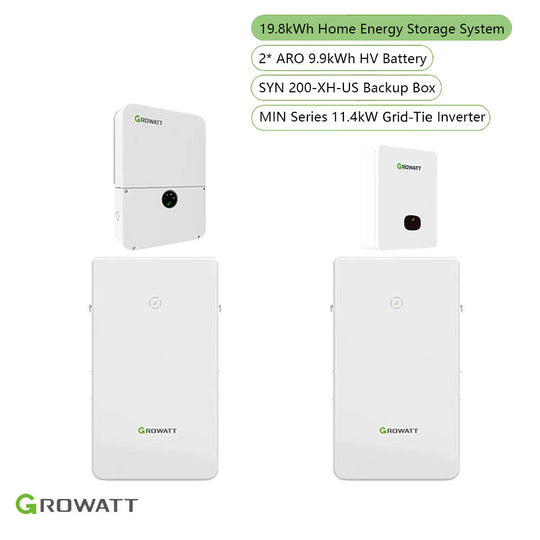
- High-voltage inverter + battery pairs (Growatt MIN-XH + APX, Solis S6 + Pytes or BYD HVL) are listed in specific combinations. The battery brand's compatibility page names the inverter models.
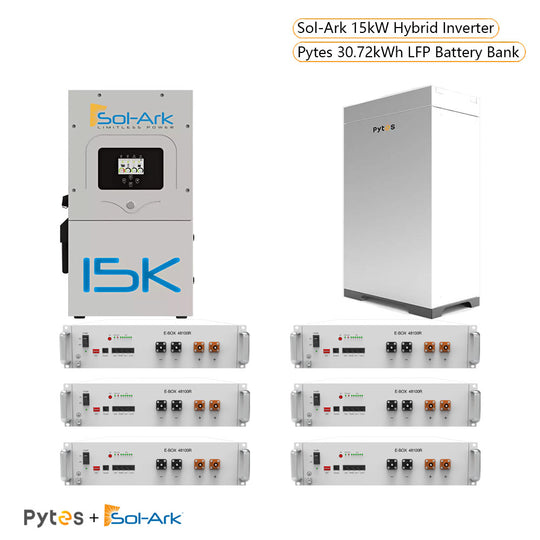
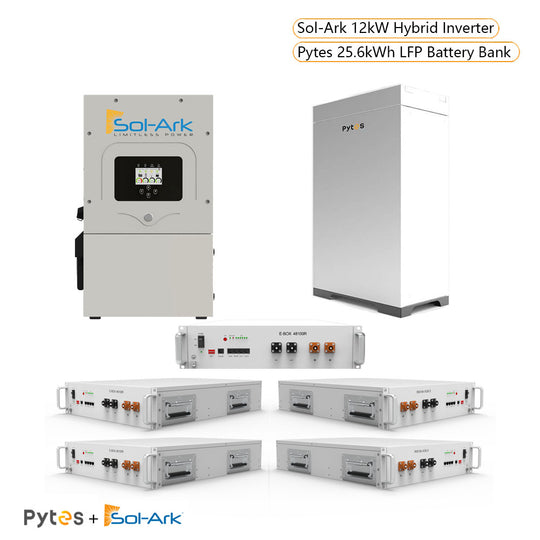
- 48 V hybrid inverter + rack batteries (Sol-Ark, Deye, Growatt SPH with RUiXU, Deye or Pytes batteries) are the most flexible, but still listed pair by pair. Our product pages note which inverters each battery holds a 9540 listing with.
A battery that is listed with Sol-Ark is not automatically listed with Growatt SPH. Check the certificate for your exact inverter model.
UL 1741, 1741-SA and 1741-SB: the inverter side
UL 1741 is the base listing for any inverter that connects to the grid. It covers electrical safety and anti-islanding: the inverter must shut off within two seconds when the grid drops, so it cannot energize a line a utility worker thinks is dead.
The supplements add grid-support functions utilities now require:
- UL 1741-SA (2016) added ride-through, volt-var and frequency-watt response, the "smart inverter" functions California's Rule 21 required first.
- UL 1741-SB (2021) aligns with IEEE 1547-2018 and is now the requirement in California, Hawaii, most of the Northeast, and a growing number of other utilities. Many interconnection applications since 2023 will not accept an SA-only inverter.
For a battery system, UL 1741 lives inside the UL 9540 listing: the inverter half of the system must hold it. For a retrofit where an old grid-tie inverter is being AC-coupled, that old inverter needs its own UL 1741 listing but sits outside the ESS boundary and does not need to be on the 9540 certificate.
Off-grid inverters that never connect to the utility only need the base UL 1741 for electrical safety; the SA and SB supplements are irrelevant to them.
What the inspector will ask for
Requirements vary by jurisdiction, but a residential ESS permit package in 2026 almost always includes these. Gather them before you submit; most rejections are missing paperwork, not failed inspections.
| Document | Where to get it | Who checks it |
|---|---|---|
| UL 9540 certificate naming both inverter and battery models | Manufacturer's website or UL Product iQ | Building department |
| UL 9540A test summary (unit or installation level) | Battery manufacturer | Fire department, for placement and spacing |
| UL 1741-SB listing for the inverter | Inverter spec sheet or CEC list | Utility, for interconnection |
| CEC listing (California, and many utilities elsewhere) | California Energy Commission equipment lists | Utility and some AHJs |
| Single-line diagram showing ESS, disconnects, and rapid shutdown | Your installer or our free design service | Building department |
| Spec sheets with kWh, kW, voltage, and weight | Product pages | Building department |
| Placement plan showing clearances from doors, windows, and other units | Installer | Fire department |
Indoor installations and anything over 20 kWh in a garage draw the closest look. Outdoor wall-mount cabinets with strong 9540A results are the easiest permit in most jurisdictions.
How to verify a model yourself
Manufacturer marketing is not proof. Two public databases are:
- UL Product iQ (productiq.ul.com, free account). Search the battery or inverter model number. A UL 9540 listing appears under category code "FTBW" with both components named. UL 1973 appears under "BBCZ". If the model number on the certificate differs from the one on the box by even a suffix, ask the manufacturer which applies.
- CEC Solar Equipment Lists (California Energy Commission). The "Energy Storage Systems" list shows systems with their UL 9540 status; the "Grid Support Inverters" list shows UL 1741-SB inverters. Utilities outside California use these lists too because they are the most complete public source.
For products we sell, the UL file numbers and CEC status are on each product page under Certifications. If a listing you need is not there, email PrimeService@self2solar.com with your inverter model and we will confirm the exact pairing before you order.
Certification status of the systems we stock
Compiled from the product listings on Self2Solar as of October 2026. Confirm the exact model and firmware on the certificate before you submit a permit; listings change as manufacturers add pairings.
| Product | Type | UL 1973 | UL 9540A | UL 9540 listed with | UL 1741 | CEC |
|---|---|---|---|---|---|---|
| Sigenergy SigenStor 11.5 kW system | All-in-one | Yes | Tested | Its own inverter (one listing) | SB | Listed |
| FOX H1-11.4-US / H1-9.6-US | HV hybrid inverter | n/a | n/a | FOX ESS ECS HV battery | Yes | Check |
| Solis S6-EH1P7.6K / 10K-H-US | HV hybrid inverter | n/a | n/a | Pytes, BYD HVL (see product page) | Yes | Check |
| Hoymiles HYS-11.5LV / 7.6LV-USG1 | 48 V hybrid inverter | n/a | n/a | Hoymiles LB-D10-USG2 battery | Yes | Listed |
| Growatt MIN 11400TL-XH-US | HV storage inverter | n/a | n/a | Growatt APX | Yes | Check |
| Growatt SPH 10000TL-HU-US | 48 V hybrid inverter | n/a | n/a | Growatt ARO/ALP; others per listing | Yes | Check |
| RUiXU Lithi2-16 16 kWh | 48 V outdoor battery | Yes | Tested | Sol-Ark and others per product page | n/a | Check |
| RUiXU RX-LFP48100 5.12 kWh | 48 V rack battery | Yes | Tested | Sol-Ark, Growatt SPH 10K | n/a | Check |
| Deye RW-F10.2-B 10 kWh | 48 V outdoor battery | Yes | Tested | Sol-Ark | n/a | Check |
| Deye SE-G5.1 Pro-B 5.12 kWh | 48 V rack battery | Yes | Tested | Sol-Ark | n/a | Check |
| FranklinWH aPower 2 + aGate | AC-coupled system | Yes | Tested | Its own inverter (one listing) | SB | Listed |
"Check" means the status is on the product page or available from us on request; we did not want to print a status here that could go stale. The full Sigenergy, Growatt, FOX ESS and battery collections carry the current certificate numbers.