Two numbers decide everything: kW and kWh
Most homes need 20 to 30 kWh of storage and an 11 to 12 kW split-phase inverter to run the whole house through a night without the grid. If you only want the fridge, lights, internet and a few outlets covered, 10 kWh and a 6 to 8 kW inverter will do. The rest of this guide shows how to land on your own number instead of a generic one.
Battery systems are sold on two specs, and people mix them up constantly:
- Power (kW) is how much the system can deliver at one moment. It decides what you can run at the same time. Power comes from the inverter and from the battery's discharge rating, whichever is lower.
- Energy (kWh) is how much the battery holds. It decides how long you can keep running. A 10 kWh battery delivering 5 kW is empty in two hours.
A well-sized system matches both: enough kW to start and run your heaviest loads together, and enough kWh to carry you through the hours you expect to be off-grid.
Step 1: List the loads you want covered, with running and surge watts
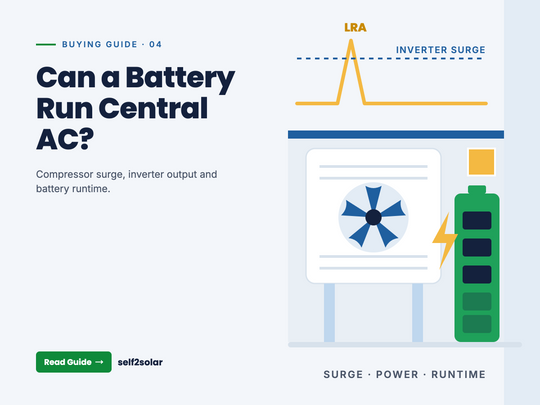
Write down everything you want running during an outage, then look up two numbers for each: the running wattage and the starting surge. Motors (compressors, pumps, fans) draw three to five times their running wattage for the first second or two. The surge is what trips an undersized inverter, not the running load.
| Load | Running watts | Starting surge | Notes |
|---|---|---|---|
| Refrigerator | 150–400 | 1,000–1,500 | Runs about 1/3 of the time |
| Chest freezer | 100–250 | 800–1,200 | |
| Well pump, 1 HP | 1,000–1,500 | 3,000–5,000 | Hardest surge in most rural homes |
| Sump pump | 800–1,200 | 2,000–3,000 | |
| Central AC, 3-ton | 3,000–3,500 | 9,000–15,000 | Soft starter cuts surge by 60–70% |
| Central AC, 5-ton | 4,500–5,500 | 15,000–25,000 | Usually needs soft starter on battery |
| Heat pump, 3-ton | 3,000–4,000 | 8,000–12,000 | Variable-speed units surge far less |
| Electric water heater | 4,500 | 4,500 | Resistive, no surge |
| Electric range, one burner | 1,200–2,500 | same | |
| Level 2 EV charger | 7,200–11,500 | same | Usually dropped from backup |
| Microwave | 1,000–1,500 | same | |
| Lights, whole house LED | 100–300 | same | |
| Internet, TV, computers | 200–400 | same |
Add the running watts of everything that will be on at once. Then find the single largest surge and add it to the running total of everything else. That second number is the peak your inverter must handle.
Example: fridge 300 W + freezer 200 W + lights 200 W + internet 300 W + well pump 1,200 W running = 2,200 W running. Well pump surge 4,000 W + 1,000 W of other running loads = 5,000 W peak. A 6 kW inverter with a 10 kW surge rating covers this comfortably.
Step 2: Pull your daily kWh from the utility bill
Your electric bill already tells you how much energy your home uses. Find the kWh for the month, divide by 30, and you have your average daily consumption. Most US homes land between 25 and 45 kWh per day; homes with central AC, a pool pump or an EV often run 50 to 80 kWh.
Two adjustments make the number realistic for backup:
- Use the worst month, not the average. Outages cluster in summer heat waves and winter storms, which are also your highest-usage months.
- Subtract what you will not run. If the EV charger, pool pump and dryer stay off during an outage, remove them. A 45 kWh home often drops to 25 kWh of loads that actually matter.
Then decide how many hours you want to cover without any solar input. Overnight is 12 to 14 hours. A full day with no sun is 24 hours.
Battery kWh = (Daily backup kWh × Hours to cover) ÷ (24 × 0.9)
The 0.9 accounts for inverter losses and the 10% reserve most batteries hold back. A home with 25 kWh of backup loads that wants to cover one night (14 hours) needs about 16 kWh. To cover a full sunless day, it needs about 28 kWh.
Step 3: Factor in solar
Solar changes the math more than any other variable. A 10 kW array in most of the US produces 40 to 65 kWh on a clear day, which is more than the house uses. During a daytime outage the battery barely discharges; it only has to carry the night.
The catch is that outages and bad weather arrive together. A hurricane, ice storm or wildfire smoke can cut solar output by 70 to 90% for days. Size for the solar you will actually get during the event, not the annual average:
| Situation | Solar you can count on | Battery sizing basis |
|---|---|---|
| Clear-weather outage (grid failure, planned shutoff) | 70–90% of normal | Cover the night only |
| Storm outage, 1–2 days | 20–40% of normal | Cover 1 full day |
| Extended storm, 3+ days | 10–30% of normal | Cover 1.5–2 days, or add a generator input |
| No solar yet | 0% | Cover the full window you want |
If you have no solar, be honest about runtime. A 20 kWh battery with no recharge is a one-night solution, not a multi-day one. For longer outages the economical answer is a smaller battery plus a generator connected to the inverter's generator port, not a 60 kWh battery bank.
Step 4: Size the inverter
The inverter must clear three bars: continuous output above your running total, surge rating above your peak from Step 1, and split-phase 120/240 V output so your 240 V loads (well pump, AC, dryer, range) work. Most whole-home installs land on an 11 to 12 kW hybrid inverter. Critical-loads-only installs do fine at 6 to 8 kW.
| Inverter | Continuous | Surge | Battery voltage | Price |
|---|---|---|---|---|
| Growatt SPH 10000TL-HU-US | 10 kW | 20 kW / 10 s | 48 V | $2,787 |
| FOX H1-11.4-US | 11.4 kW | 2× / 10 s | High voltage | $1,898 |
| Growatt MIN 11400TL-XH-US | 11.4 kW | 1.5× | High voltage | $1,695 |
| Sigenergy SigenStor 11.5 kW | 11.5 kW | 17.1 kW / 10 s | Integrated | From $6,178 (with battery) |
Two things to check beyond the headline number:
- Battery discharge rating. A 48 V battery rated at 100 A delivers about 5 kW. Two in parallel deliver 10 kW. A 10 kW inverter on a single 5 kW battery is limited to 5 kW no matter what the inverter can do.
- Pass-through rating. When the grid is up, the inverter passes grid power to your loads. Some 10 kW inverters pass through 50 A or more, others only 40 A. If the whole house runs through the inverter, the pass-through rating has to cover your normal peak demand, not just the backup loads.
Three configurations that cover most homes
These three tiers cover roughly 90% of the whole-home backup requests we see. Prices are equipment only, as listed on Self2Solar in October 2026; installation, permits and the critical-loads panel are extra.
| Tier | What it runs | Battery | Inverter | Equipment price | Example build |
|---|---|---|---|---|---|
| Critical loads | Fridge, freezer, lights, internet, well or sump pump, gas furnace blower | 10 kWh | 6–8 kW | $4,300–5,500 | Deye RW-F10.2-B 10 kWh ($2,399) + 8 kW 48 V hybrid inverter |
| Most of the home | Everything above plus water heater, range, washer, one mini-split or small AC | 16–20 kWh | 10–11.4 kW | $9,800–10,500 | SigenStor 11.5 kW / 18 kWh ($9,797) or Growatt 20 kWh whole-home kit ($10,476) |
| Whole home with central AC | Everything, including a 3–5 ton central AC through the night | 30 kWh+ | 11.4–12 kW, soft starter on AC | $13,000–16,000 | SigenStor 11.5 kW with 3× 8 kWh modules, or Growatt MIN 11.4 kW + 30 kWh APX |
If your Step 2 number sits between tiers, go up, not down. Battery capacity is the one thing you cannot fix with a firmware update, and most owners report wishing they had bought one more module.
Start smaller than you think, but buy a system that stacks
Modular battery systems let you start at 10 to 16 kWh, watch a season of real usage in the app, and add capacity later without replacing anything. That is a better plan than guessing high on day one. The condition is that the system you choose has to be designed for expansion.
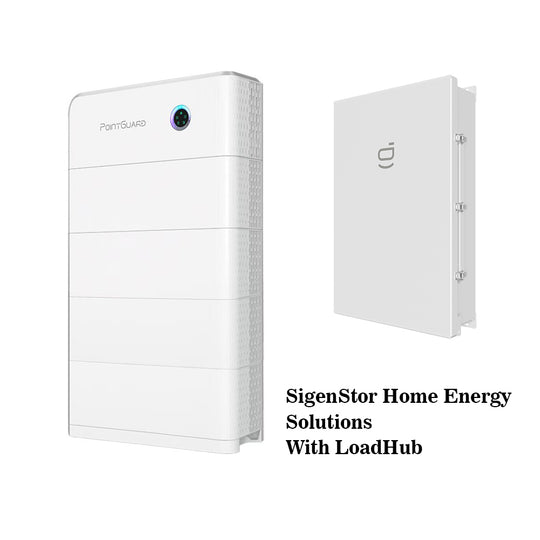
- Sigenergy SigenStor uses BAT 6.0 (6.02 kWh) or BAT 9.0 (9.04 kWh) modules. One tower supports 1–6 matching modules, providing 6.02–36.12 kWh with BAT 6.0 or 9.04–54.24 kWh with BAT 9.0.
- Growatt APX uses 5 kWh modules. One APX battery system supports up to six modules arranged across as many as two battery towers, for up to 30 kWh total capacity.
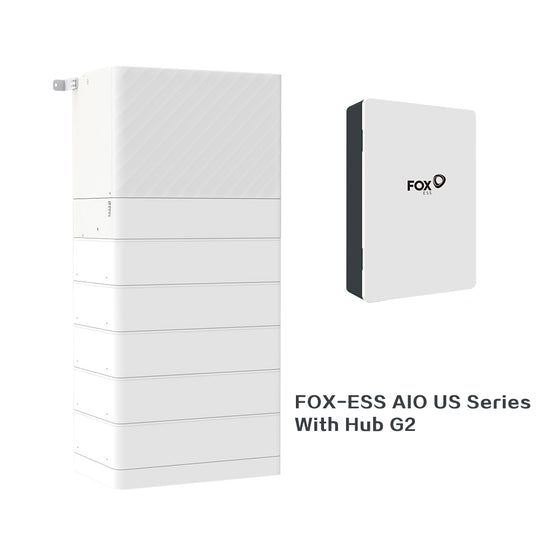
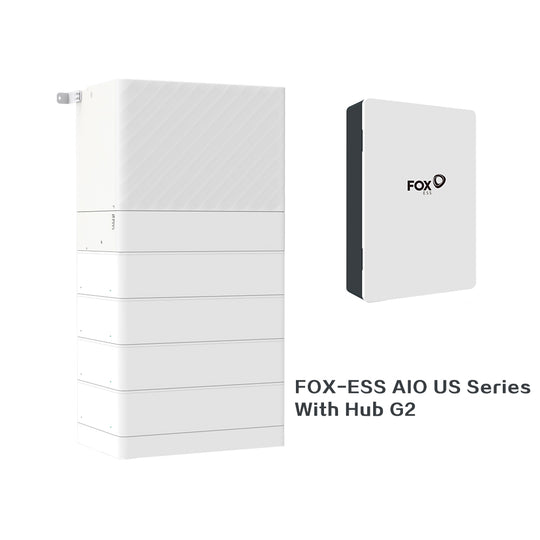
- FOX ESS PowerQ uses 3.97 kWh EQ4000 modules and supports up to seven modules, or 27.79 kWh, in one battery tower. Some California authorities having jurisdiction (AHJs) limit a single residential battery tower to less than 20 kWh; in those areas, five modules provide 19.85 kWh and remain below that threshold.
- Deye, RUiXU, and Hoymiles 48 V batteries support approximately 10–30 units in parallel, depending on the exact battery model, BMS, inverter compatibility, and manufacturer limits.
Two expansion rules to check before you buy: whether a new module can be mixed with a two-year-old one (most brands allow it within the same model line), and whether the inverter's battery-current limit will still cover the bigger bank. A 48 V inverter limited to 200 A of battery current will never pull more than about 10 kW, however many batteries sit behind it.
Five sizing mistakes we see every week
- Sizing on kWh alone. A 30 kWh bank behind a 5 kW inverter still cannot start the well pump and the AC together. Check the surge math in Step 1 first.
- Ignoring the soft starter. A $300 soft starter on a central AC compressor can be the difference between an 11 kW inverter working and a 15 kW inverter being required.
- Using annual solar averages. Your array's December output in Ohio is one-third of its June output. Size for the season when outages happen where you live.
- Forgetting the 240 V loads. Well pumps, AC, water heaters and dryers need both legs of a split-phase inverter. A 120 V-only inverter or a single-phase import unit will not run them.
- Not leaving room on the inverter's battery port. If you plan to expand, buy the inverter for the battery bank you will have in three years, not the one you buy today.