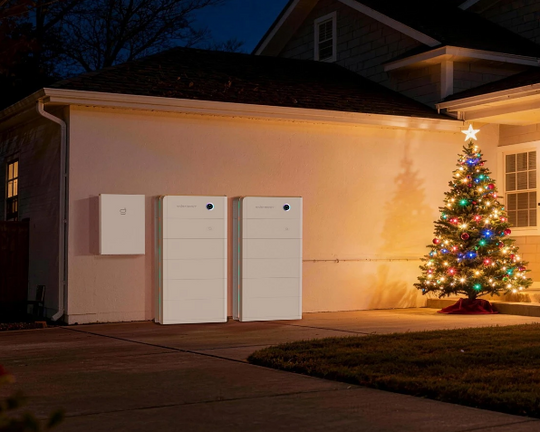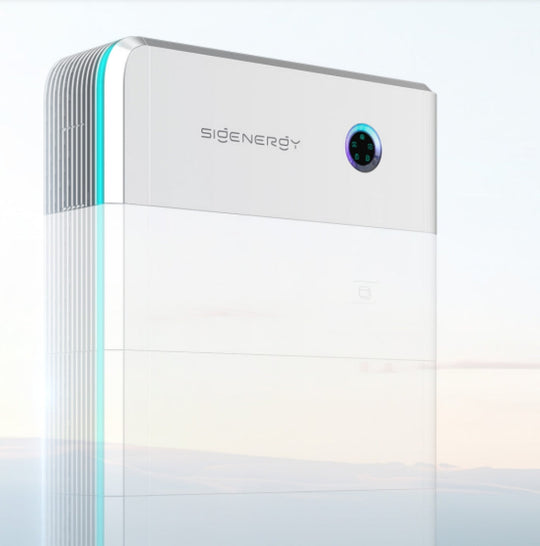
Most Sigenergy backup system bundles include the LoadHub, so for most buyers the question isn't whether to get one. It's how to configure it for your home. For whole-home backup, it manages all your circuits automatically when the grid drops. For essential-load backup, it lets you define which circuits get protected first. Either way, it's the component that turns stored battery energy into reliable, controlled backup power.
Most buyers spend their research time on battery capacity and inverter specs. The LoadHub doesn't store anything and doesn't generate power. It handles backup load management: where backup energy goes and how fast it gets there. Storage capacity tells you how much energy you have. The LoadHub tells you which loads get it, in what order, and without a gap when the grid goes down. That's the distinction most buyers miss when they're comparing SigenStor system sizes.
What Is the Sigen LoadHub?
The Sigenergy LoadHub is a 200A split-phase 120/240V automatic transfer switch (ATS) and load controller, built specifically for SigenStor systems. It connects to your SigenStor batteries (UL9540 and UL1973 certified) and Sigen Energy Controller to manage how backup power flows through your home during an outage.
Think of it as the distribution layer of your backup system. Your batteries store the energy. The LoadHub decides where it goes. Shop the Sigen LoadHub to see full specs and compatibility details.
It operates as a separate unit from your main electrical panel, sitting between the grid and your home to manage the transition to backup power automatically. The U.S. Department of Energy confirms that solar paired with battery storage can keep critical facilities running during an outage. How well it works depends on how stored energy is distributed across the loads that matter most. That's the LoadHub's job.
What Does the LoadHub Do?
The LoadHub handles four main jobs in a Sigenergy backup setup:
-
Automatic transfer: Detects outages and switches to backup power instantly. There's 0ms load-side disruption, so protected appliances won't notice a thing.
-
Load control: Comes with 6 double-pole (12 single-pole) breaker slots. Five are smart load positions for things like pool pumps and central AC. One is a dedicated port for a generator or heat pump.
-
Backup circuit planning: You choose which loads are protected and in what order. This works for both whole-home and partial-home backup loads.
-
Energy monitoring: Works with the mySigen App. Track usage in real time and control power flow from your phone.
The LoadHub doesn't make power. It controls how stored power is used and how fast it gets where it needs to go. That 0ms switchover is a big deal. Standard transfer switches can leave a noticeable gap when the grid goes down. The LoadHub doesn't.
When Do You Need a LoadHub?
Most SigenStor bundles already include the LoadHub. So you don't need to decide if you want one. You just need to figure out how to set it up.
Here's when it really makes a difference:
-
You need Sigen LoadHub to cover every circuit in your home during an outage
-
You want the system to power essential loads first — like your HVAC, fridge, or medical equipment
-
You have multiple SigenStor battery modules and need steady output across all of them
-
You want 0ms switchover so your protected loads never feel the grid go down
-
You want to check and control everything from the mySigen App
Before anything else, you need to size your system right. That means two things: how much power it can push out at once (kW), and how long it can keep going (kWh). The U.S. Department of Energy says your storage needs to run your critical loads for the whole outage — not just part of it. Nail both numbers, and your backup power will actually hold up when you need it. The LoadHub is what keeps that power organized and under control.
If backup power is part of your plan, the LoadHub isn't optional. It's how the system works. Plan whole-home backup with Sigenergy to find the right size for your home. Not sure where to start? Look at your essential load backup needs first.
Sigenergy LoadHub for Whole-Home Backup
Whole-home backup is the most comprehensive way to use your LoadHub. When you want your battery to cover your HVAC, refrigerator, lighting, and other key loads simultaneously, you need more than raw storage capacity. You need a way to distribute that power across every circuit automatically.
The LoadHub handles that. It detects the outage, switches over in 0ms, and keeps your whole home running from your SigenStor batteries without any manual intervention.
SigenStor systems scale from 6.02kWh up to 54.24kWh, so whole-home backup is achievable across a wide range of home sizes and energy requirements. Plan whole-home backup with Sigenergy to find the right system size before you finalize your component list. For buyers who want full coverage and zero disruption, whole-home config is the straightforward path. The main planning variable is matching your total circuit draw to your battery capacity. The LoadHub manages distribution; your SigenStor system size determines how long it runs.
Sigenergy LoadHub for Essential Load Backup
Not every homeowner needs to back up the whole house. Many want to keep specific circuits running: the refrigerator, a few lights, a medical device, or the router. Non-essential loads sit idle during the outage.
The LoadHub's 5 smart load positions let you do exactly that. You decide which loads are protected, and the LoadHub routes battery power there first. During an outage, your stored energy goes where it matters most rather than spreading thin across your whole panel.
When solar is paired with a SigenStor battery, recharging happens daily. The California Air Resources Board's zero-emission residential backup power tool accounts for multiple days of runtime from solar-paired systems. Circuit-level load management directly affects how long your backup lasts. A smaller draw on the battery means more hours of coverage per charge cycle.
This makes partial-home backup a solid option for homeowners who want reliable essential-load coverage without drawing down the full battery each day.
LoadHub vs Standard Electrical Panel Backup Setup
It's worth understanding how the LoadHub compares to relying on a standard backup approach through your electrical panel alone.
|
Feature |
LoadHub Setup |
Standard Panel Backup |
|
Switchover speed |
0ms (load-side, no interruption) |
1–3 sec gap (typical relay-class ATS) |
|
Circuit prioritization |
Yes: 6 double-pole positions (5 smart loads + 1 generator port) |
Limited (depends on panel config) |
|
Whole-home or partial backup |
Both supported |
Depends on wiring |
|
Sigenergy ecosystem integration |
Full (Controller + mySigen App) |
Not integrated |
|
Outage detection |
Automatic |
Manual interlock or generator ATS required |
|
Scalability |
Designed for SigenStor multi-battery setups |
Can become complex at scale |
If you're building a SigenStor system, the LoadHub is the purpose-built solution. Standard panel backup approaches don't offer the same level of automatic control or ecosystem integration. Review installation requirements before finalizing your system design.
How LoadHub Works with SigenStor Batteries
The LoadHub and SigenStor batteries are designed to work together as part of a complete system. Your SigenStor BAT 9.0 (9.04kWh per module) stores the energy. The LoadHub manages how that energy flows to your home the moment the grid drops.
With SigenStor systems scalable up to 54.24kWh across stackable BAT 6.0 and BAT 9.0 modules, larger systems benefit especially from the LoadHub's ability to manage output across circuits without overloading individual loads.
Pair LoadHub with SigenStor BAT 9.0 to build a scalable multi-battery backup setup that grows with your home's energy needs.
How LoadHub Works with the Sigen Energy Controller
The Sigen Energy Controller is the system brain. The LoadHub is the distribution and transfer layer. Together, they form a complete backup management setup.
The Sigen Energy Controller is an 11.5kW 120/240V split-phase hybrid inverter with up to 23kW PV input. It manages the flow between solar input, battery storage, and home consumption. The LoadHub works within that system to handle automatic outage detection, circuit control, and backup power distribution.
Everything is monitored and controlled through the mySigen App, giving you real-time visibility across your whole system from one place.
Add the Sigen Energy Controller to complete your SigenStor system with full backup control and solar integration.
Should You Buy LoadHub with Your Sigenergy System?
The LoadHub is included in most SigenStor bundles, so for most buyers it's already part of the system. The real decision is how to configure it for your home.
Here's a quick guide by scenario:
|
Scenario |
Recommended Config |
|
Want zero disruption across the whole home |
Whole-home backup |
|
Want to protect specific circuits (fridge, HVAC, medical) |
Partial-home / essential-load |
|
Large system (multiple SigenStor modules, high daily usage) |
Whole-home backup |
|
Smaller system, focused on key loads and longer runtime |
Partial-home backup |
|
Solar paired with batteries for extended outage coverage |
Either (solar recharges daily) |
The LoadHub supports both configurations out of the box. The right choice comes down to your battery capacity and which loads matter most during an outage. Build a Sigenergy backup system and find the bundle that fits your home.
FAQs About Sigen LoadHub
What does the LoadHub do that the battery doesn't?
The battery stores energy. The LoadHub controls where that energy goes and how fast it gets there when the grid drops. Without the LoadHub, your SigenStor battery has no automatic outage detection and no mechanism to switch your home's circuits to backup power. The battery provides the energy; the LoadHub is what delivers it to your loads at the moment you need it.
Is the LoadHub included with my SigenStor system?
Yes. The LoadHub is included in most SigenStor system bundles sold at Self2Solar. It's a core part of the SigenStor setup, not a separate optional purchase in most configurations.
What's the difference between whole-home and partial-home backup?
Whole-home backup powers every circuit during an outage. Partial-home backup lets you define which circuits are protected. The LoadHub routes battery power to those loads first, leaving non-essential circuits offline to extend runtime.
How fast does the LoadHub switch to backup power?
The LoadHub provides 0ms load-side disruption when switching to backup mode. There's no gap in power to your protected circuits when the grid drops.
How many loads can the LoadHub control?
The LoadHub has 6 double-pole (12 single-pole) controllable breaker positions total: 5 smart load positions (each rated 64A continuous) for loads like pool pumps, central AC, and HVAC, plus 1 dedicated port for a generator or heat pump.
Does the LoadHub work without the Sigen Energy Controller?
No. The LoadHub requires the Sigen Energy Controller to function as a backup system. The Controller is the hybrid inverter that manages solar input, battery charging, and power conversion. The LoadHub connects to the Controller to handle automatic outage detection and circuit-level load management. Without the Controller, the LoadHub has no power source to switch. Both components are required for any SigenStor backup setup.
What can I monitor through the mySigen App?
You can track real-time energy usage, monitor battery state, and control power flow across your circuits, all from the mySigen App.
LoadHub Helps Turn Stored Energy into Practical Backup Power
A Sigenergy battery system gives you stored energy. The LoadHub gives you control over how that energy works for your home when you need it most: automatic outage detection, 0ms switchover, and flexible configuration for whole-home or essential-load backup.
Whether you're protecting every circuit or just the ones that matter most, the LoadHub is what makes your SigenStor system perform when the grid goes down.
Explore the full Sigenergy product range at Self2Solar and find the right system bundle for your home.