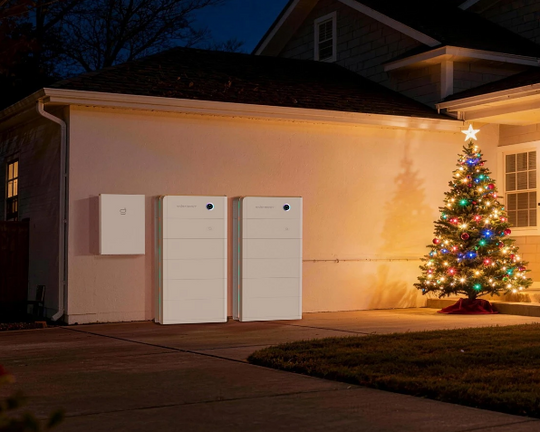
Yes, Sigenergy batteries can power a whole home. But it depends on your configuration. A properly sized SigenStor system with enough BAT 6.0 or BAT 9.0 modules, a Sigen LoadHub, and solar recharge can support whole-home backup. Smaller homes with lower energy loads are easier to cover. Larger homes or homes with EV charging may need more capacity.
Most homeowners who pay for battery backup still lose HVAC during an outage. They bought essential-load coverage without realizing it. Here's the difference that matters.
Sigenergy's SigenStor system is built for whole-home backup. Whether it covers your home comes down to three things: battery capacity, system configuration, and the loads you need to power. Here's what to know before you buy.
This guide covers how Sigenergy whole-home backup works and when it doesn't. You'll learn what affects coverage, how BAT 6.0 and BAT 9.0 modules fit into the picture, and what a properly configured setup looks like for different home sizes.
What Whole-Home Backup Means
Whole-home backup means your whole house stays on when the grid goes down. Lights, AC, kitchen, water heater — all of it.
Essential-load backup is a different story. You pick a handful of circuits to protect. A fridge, some lights, a few outlets. It's a cheaper option, but you're giving up a lot.
With whole-home backup, nothing gets left out. But it takes more battery power and a system built to switch your full panel over.
One study from Lawrence Berkeley National Laboratory put some numbers to it. Homes with 30 kWh of storage and solar covered 96% of their full power needs during a 3-day outage. That includes heating and cooling.
SigenStor handles both setups. You can manage backup loads with LoadHub to decide which circuits get priority. The best fit depends on how your home uses energy.
Can a Sigenergy System Support Whole-Home Backup?
Yes. A properly configured SigenStor system can support whole-home backup.
The Sigen LoadHub handles the switching. It's a 200A service entrance-rated automatic transfer switch (ATS) with five double-pole controllable loads and 0 ms load-side disruption when switching to backup mode. That means no flicker, no restart delay.
But the system has to be sized correctly. Whole-home backup demands more battery capacity than essential-load backup. Your daily energy use, home size, and appliance mix all affect whether one stack is enough, or whether you need more.
What Affects Whether Sigenergy Can Power Your Whole Home?
Several factors determine your Sigenergy backup capacity:
-
Battery capacity: How many kWh you have stored across your BAT 6.0 or BAT 9.0 modules
-
Number of modules: Each SigenStor stack supports up to six modules per controller
-
Home battery loads: HVAC is the biggest draw; a 3-ton unit can pull 3–5 kW on its own
-
Solar recharge: Daytime solar generation extends your backup window significantly
-
LoadHub configuration: Which circuits are controlled and prioritized
-
EV charging: A bidirectional EVDC adds load; vehicle-to-home (V2H) can also add supply
A smaller home using 20–30 kWh per day has different needs than a larger home using 60+ kWh. For reference, the U.S. Energy Information Administration reports that the average U.S. home uses about 30 kWh per day, a practical starting point for sizing your system.
Size your Sigenergy battery system to match your home's actual load.
SigenStor Battery Modules and Whole-Home Backup
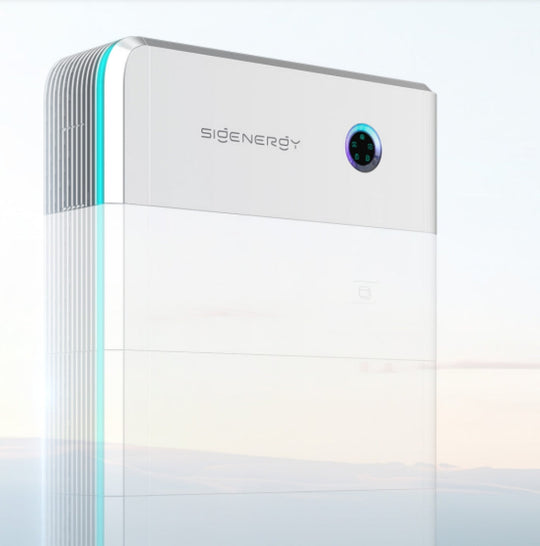
The SigenStor system uses two battery modules: the SigenStor BAT 6.0 (6.02 kWh) and the SigenStor BAT 9.0 (9.04 kWh). Both share the same dimensions, so you can mix them within a stack.
A single SigenStor stack can hold up to six modules. That gives you a maximum of 54.24 kWh per stack using BAT 9.0 modules.
Compare SigenStor battery modules to find the right mix for your home backup battery capacity target.
Both the BAT 6.0 and BAT 9.0 carry UL9540 and UL1973 certifications, the key safety standards for residential battery storage in the US.
For whole-home backup, most homes will want at least two BAT 9.0 modules (18.08 kWh) as a starting point. High-usage homes or those running HVAC through the night will need more.
Why LoadHub Matters for Whole-Home Backup
The Sigen LoadHub is what makes whole-home backup loads manageable. Not just essential-load backup.
Without a LoadHub, the SigenStor system backs up only a dedicated essential-load sub-panel — useful for keeping lights and a fridge on, but your HVAC and main circuits won't transfer automatically. With a LoadHub, you get full-panel switching, circuit prioritization, and smart load control.
Learn when you need a Sigen LoadHub to decide if it's right for your setup.
Key LoadHub specs:
-
200A service entrance rated: handles full-panel load switching
-
5 double-pole controllable loads: lets you prioritize or shed circuits automatically
-
0 ms switchover: no disruption when the grid drops
-
Generator port included: connect a generator as a backup source
-
mySigen app integration: monitor and control the whole system remotely
If your quote doesn't include a LoadHub, ask about it. It's the component that separates whole-home backup from partial backup.
Whole-Home Backup vs Essential Load Backup
|
Feature |
Whole-Home Backup |
Essential Load Backup |
|
Circuits covered |
Entire main panel |
Selected critical circuits only |
|
LoadHub required |
Yes |
No |
|
Battery demand |
Higher |
Lower |
|
HVAC covered |
Yes |
Usually no |
|
Best for |
Most homeowners wanting full coverage |
Budget-focused installs, smaller homes |
|
Switchover time |
0 ms (with LoadHub) |
Depends on transfer switch |
Example Whole-Home Backup Scenarios
Real homes have different needs. Here's how a Sigenergy backup setup might look across common home battery backup scenarios:
Small home (1,500–2,000 sq ft, 25–35 kWh/day)
Two BAT 9.0 modules (18.08 kWh) plus solar recharge can cover overnight and into the next morning. HVAC runtime is the main variable.
Medium home (2,000–3,000 sq ft, 40–55 kWh/day)
Three to four BAT 9.0 modules (27–36 kWh) gives solid multi-day coverage with solar topping up during the day. Ideal for most Sigenergy home backup setups.
Large or high-load home (3,000+ sq ft, 60+ kWh/day)
Five to six modules per stack, or a second SigenStor controller in parallel, may be needed. The system supports up to seven SigenStor units in parallel for larger installs.
Home with EV charging
The EVDC V2X bidirectional charger adds vehicle-to-home (V2H) capability. Your EV can push energy back into the home during an outage. This extends backup time without adding battery modules.
When Sigenergy May Not Be Enough for Whole-Home Backup
SigenStor handles most home backup situations just fine. But some homes need more careful planning.
Here's when to pay close attention:
-
You use a lot of power daily. Homes that use 80+ kWh a day may need the largest system size or more than one unit running together.
-
You don't have solar. Without solar to recharge, you're limited to whatever is stored in the battery. That's one of the key battery backup limitations to know upfront. Solar makes a big difference. That same Lawrence Berkeley National Laboratory study found that a 30 kWh system with solar still covered 92% of a home's power needs by day 10 of an outage.
-
You have a large HVAC system. Big heat pumps or multiple AC zones hit whole-home battery sizing harder than anything else in your home.
-
You're running multiple systems. Parallel SigenStor units need a licensed installer to size and set up correctly. This isn't a DIY job.
If any of these apply to you, get a professional load analysis before you buy. It's the best way to avoid ending up with a system that's too small.
How to Choose a Sigenergy Whole-Home Backup Setup
Ready to choose a whole-home backup battery? Here's how to approach your Sigenergy system setup.
Choose your Sigenergy backup system for a deeper breakdown of all available configurations.
-
Calculate your daily energy use: Check your utility bill for kWh/month; divide by 30 for the daily average. If sizing for reliability during high-demand seasons, use the highest-usage month on your 12-month bill history, not the annual average. Summer HVAC loads in hot climates can run 40–60% higher than off-season months.
-
List your critical loads: HVAC, fridge, water heater, medical equipment, EV charging
-
Choose your battery count: Start with BAT 9.0 modules for maximum per-module capacity
-
Include a LoadHub: Required for whole-home backup and circuit-level control
-
Add solar if possible: Even a small array extends backup runtime significantly
-
Consider the EVDC V2X: If you have an EV, bidirectional charging adds both load management and backup supply
Example: A 2,500 sq ft home in Phoenix with a 3-ton heat pump, using 55 kWh/day at peak summer load, needs three to four BAT 9.0 modules (27–36 kWh) plus a LoadHub and solar for multi-day whole-home coverage. Without solar, 27 kWh covers roughly 11–12 hours at that load before needing a recharge.
For most homes, a SigenStor system with two to four BAT 9.0 modules, a LoadHub, and existing or new solar covers whole-home backup comfortably.
FAQs About Sigenergy Whole-Home Backup
How many battery modules do I need for whole-home backup?
Most homes need at least two to four BAT 9.0 modules (18–36 kWh) for meaningful whole-home coverage. High-usage homes or homes without solar may need more. Use your monthly utility bill to estimate daily kWh use.
Does the SigenStor system include a LoadHub?
Yes. SigenStor systems sold at Self2Solar include the Sigen LoadHub. It's the key component for whole-home backup and load control.
How long will Sigenergy batteries last during an outage?
It depends on your stored capacity and load. A 27 kWh system (three BAT 9.0 modules) powering a medium home at 40 kWh/day would last roughly 16 hours without solar. With daytime solar recharge, coverage extends across multiple days.
Can Sigenergy batteries recharge from solar during an outage?
Solar recharge during an outage is one of the SigenStor system's most practical advantages. The Sigen Energy Controller manages solar input, battery state, and home loads simultaneously, so your storage keeps refilling as long as the sun is up.
Does Sigenergy work with EV charging?
Yes. The optional EVDC V2X bidirectional charger integrates with the SigenStor system. In V2H mode, your EV can supply power back to your home during an outage. The EVDC requires the SigenStor system and at least one battery module to operate.
What certifications do SigenStor batteries carry?
Both the BAT 6.0 and BAT 9.0 carry UL9540 and UL1973 certifications. The full SigenStor system is also CEC listed.
Can I install Sigenergy myself?
The SigenStor system is designed to be installer-friendly with fast commissioning. However, connection to your main panel and the LoadHub should be done by a licensed electrician. DIY buyers often handle equipment sourcing while a local electrician handles the install.
Conclusion: Whole-Home Backup Requires the Right Sigenergy Configuration
Sigenergy batteries can power a whole home. But only when the system is properly configured. The right number of BAT 6.0 or BAT 9.0 modules, a Sigen LoadHub, and solar recharge turn a basic home battery system into a true whole-home backup solution.
Homes with lower energy loads and solar access will get the most out of a smaller stack. High-load homes, homes with EVs, or homes without solar need more capacity and careful load planning.
SigenStor systems are modular by design. You can start with what you need now and expand later.
Self2Solar stocks the full SigenStor lineup, from individual BAT 6.0 and BAT 9.0 modules to complete LoadHub-integrated system bundles.
Browse SigenStor BAT 9.0 modules, LoadHub bundles, and complete Sigenergy home energy systems at Self2Solar — and build the right configuration for your home.