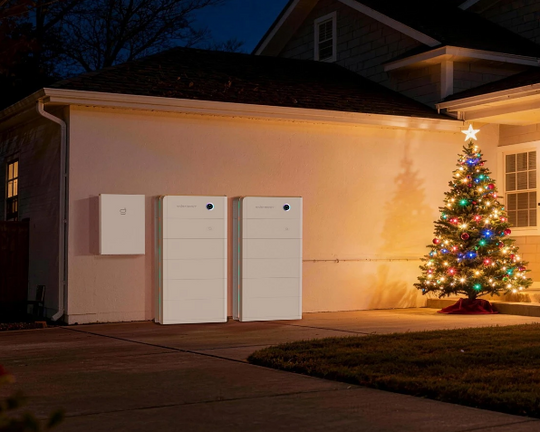
The Sigen Energy Controller is a required component of every SigenStor system — a 5-in-1 hybrid inverter that handles solar input, battery charging, backup switching, grid interaction, and optional EV charging from one unit. You cannot build a functioning SigenStor setup without it. It ships as part of every SigenStor package; you don't select it separately. You choose battery capacity, LoadHub, and optional accessories around it.
At 11.5 kW output with up to 23 kW of PV input capacity, it scales from a single 6.02 kWh battery module up to 54.24 kWh per stack. Every BAT 6.0 or BAT 9.0 module, every backup circuit, and every EVDC charging session routes through the Energy Controller.
This guide covers what the controller does, how it connects to the rest of the SigenStor system, and what you should confirm before buying.
What Is the Sigen Energy Controller?
The Sigen Energy Controller is a hybrid inverter. It converts DC power from your solar panels into AC power your home can use. It also manages the flow of energy between your solar array, your battery modules, your home loads, and the utility grid.
Key specs at a glance:
|
Spec |
Value |
|
Output power |
11.5 kW |
|
Voltage |
120/240V split-phase |
|
Max PV input capacity |
23 kW |
|
Max PV input voltage |
600V |
|
Battery chemistry |
LFP (LiFePO4) |
|
IP rating |
IP65 (suitable for outdoor installation) |
|
Certifications |
UL1741, UL9540, CEC Listed |
It's the central unit in the SigenStor 5-in-1 architecture, integrating the inverter, battery PCS, battery packs, EMS, and optional EV charging into one system. Shop the Sigen Energy Controller at Self2Solar to see current configurations.
What Does the Sigen Energy Controller Do?
The controller handles four core functions:
-
Solar integration: takes DC power from your PV array and converts it for home use or battery storage
-
Battery management: controls charging and discharging of your BAT 6.0 or BAT 9.0 modules
-
Backup power: switches your home to battery power during an outage
-
Grid interaction: manages time-of-use optimization and grid export where permitted. As Clean Energy Reviews notes, solar batteries paired with TOU billing allow homeowners to charge during low-cost periods and discharge during peak-rate windows to reduce electricity costs.
All four functions run through the controller. There is no separate inverter, no separate battery manager. The controller handles it in one unit.
Every SigenStor Module and Upgrade Routes Through the Controller
The SigenStor system is modular. You can add battery modules as your storage needs grow. You can connect a LoadHub for backup load management. You can add EVDC charging if you have an EV.
But every module, every upgrade, every function routes through the Energy Controller. It's the central coordinator.
The controller isn't optional — it's the system. Read the Sigenergy buying guide before finalizing your setup.
When Do You Need the Sigen Energy Controller?
You need the Energy Controller for every SigenStor installation. But the use cases where it's especially critical include:
-
SigenStor battery setup: no controller, no functioning system
-
Solar-plus-storage: controller manages both the PV array and the battery bank
-
Whole-home or partial-home backup: controller handles the switchover automatically
-
EV charging integration: the EVDC bidirectional charger requires the controller and cannot operate independently
-
System monitoring: the mySigen app connects through the controller to give you live energy data
If any of these apply to your setup, the Energy Controller isn't a consideration. It's a requirement.
Sigen Energy Controller vs Traditional Hybrid Inverter
Buyers familiar with standard hybrid inverters sometimes assume the Sigenergy controller functions the same way. There are key differences.
|
Feature |
Traditional Hybrid Inverter |
Sigen Energy Controller |
|
System integration |
Inverter only; battery and EMS are separate |
5-in-1: inverter, battery PCS, EMS integrated |
|
EV charging |
Usually separate hardware |
Native EVDC integration (optional add-on) |
|
Load control |
Third-party smart panel required |
LoadHub integrates directly |
|
Scalability |
Limited by external components |
Stack up to 6 battery modules per controller |
|
AI optimization |
Not standard |
Built-in AI energy management via mySigen |
The Sigen controller isn't just an inverter. It's the operating center for the entire SigenStor system.
How the Controller Works with SigenStor Batteries
Each SigenStor system pairs the Energy Controller with one or more BAT 6.0 (6.02 kWh) or BAT 9.0 (9.04 kWh) LFP battery modules (UL9540 and UL1973 certified). You can configure storage from 6.02 kWh up to 54.24 kWh per stack.
The controller manages charging priority, discharge curves, and backup reserve levels. LFP chemistry avoids cobalt and nickel, two supply-constrained materials, and is the standard for stationary storage due to thermal stability and long cycle life.
It also enables AC coupling, so you can retrofit an existing solar system by connecting a third-party string inverter or microinverter to the LoadHub, with the mySigen app managing the whole setup.
Up to 7 SigenStor systems can run in parallel through one LoadHub, reaching up to 379.68 kWh of combined storage (7 stacks × 54.24 kWh). That scale also makes the platform viable for light commercial and multi-family installations. Pair BAT 6.0 with the Energy Controller to start building your system.
How the Controller Works with LoadHub
The Sigen LoadHub is a smart load management panel that connects directly to the Energy Controller. It gives you:
-
5 double-pole controllable loads
-
0 ms load-side disruption when switching to backup power
-
Generator support
-
200A service entrance rating
The LoadHub is how you manage which circuits stay live during an outage. Without the Energy Controller, the LoadHub has nothing to connect to. Add LoadHub for backup control when configuring your system.
How the Controller Works with EVDC Charging
The Sigen EVDC bidirectional charger connects to the Energy Controller and extends the system's capabilities to your EV.
Key things to know:
-
The EVDC charger cannot operate independently; it requires the SigenStor system including the controller
-
According to the American Solar Energy Society, V2H systems allow homeowners to use their EV battery as a flexible energy source, storing surplus solar during the day and supplying power to the home during outages or peak-rate periods
-
The controller manages the energy flow between the solar array, battery storage, and your vehicle
-
Charging is optimized automatically through the AI energy management system
If EV charging is part of your energy plan, the controller is not optional. It's what makes the EVDC charger functional. Add EV charging to your Sigenergy system when you're ready.
Should You Buy the Sigen Energy Controller with Your Battery?
Yes. Every SigenStor configuration includes one Energy Controller. You don't select it separately; it's part of each system package. What you do select is:
-
Battery capacity: how many BAT 6.0 or BAT 9.0 modules you need
-
LoadHub: included in standard SigenStor configurations at Self2Solar
-
EVDC charger: optional, for EV owners
-
System count: whether you need more than one SigenStor stack
Review your home's energy load before finalizing capacity. If you're unsure how many kWh you need, the SigenStor range at Self2Solar covers 6.02 kWh up to 54.24 kWh per stack. Build your Sigenergy system and check current configurations.
FAQs About the Sigen Energy Controller
Does the Sigen Energy Controller work with existing solar?
Yes. SigenStor supports AC coupling for retrofits. Connect your existing string inverter (Growatt, Solis, or other grid-tie models) or microinverter array to the LoadHub, and the mySigen app manages the combined system, including time-of-use optimization and backup switching. Check inverter compatibility with SigenStor before pairing; not all third-party models and firmware versions are supported in every AC-coupling configuration.
Does the controller support whole-home backup?
Yes. The SigenStor system supports both whole-home backup and partial-home backup, controlled through the LoadHub.
What batteries work with the controller?
The SigenStor BAT 6.0 (6.02 kWh) and BAT 9.0 (9.04 kWh) modules are the compatible LFP battery packs; both carry UL9540 and UL1973 certifications. You can mix modules within a stack, scaling from 6.02 kWh to 54.24 kWh per controller.
What's the controller's relationship to LoadHub?
The LoadHub connects directly to the Energy Controller and manages backup load switching. They function together: the controller coordinates energy flow, the LoadHub handles circuit-level control.
Can I add EVDC charging later?
Yes. The EVDC charger can be added to an existing SigenStor system as long as the Energy Controller is already installed.
The Energy Controller Is Central to the Sigenergy System
The Sigen Energy Controller manages solar conversion, battery charging, backup switching, and grid interaction from one unit. It's what makes the BAT 6.0 and BAT 9.0 modules function, the LoadHub switch, and the EVDC charger operate.
Start with the controller and build the rest of your system around it. Browse Sigenergy products at Self2Solar to find the right configuration for your home.