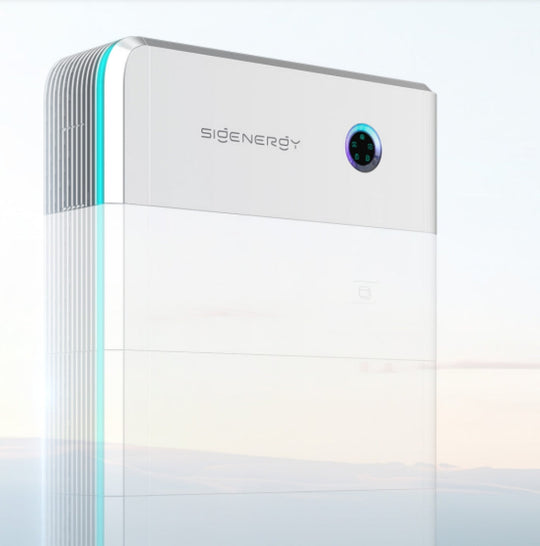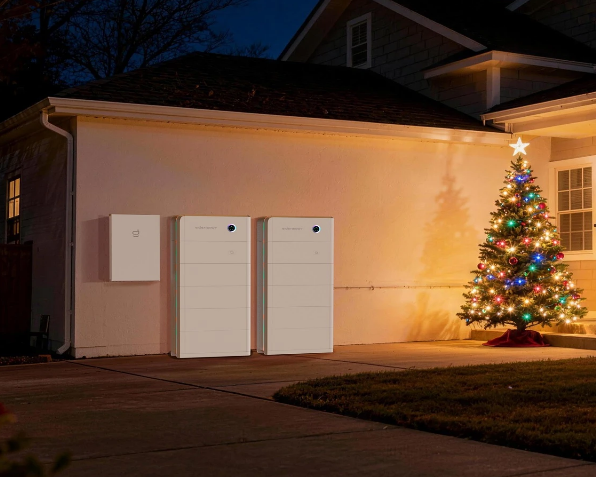
Spec just the battery and you have 9.04 kWh of LFP storage that can't back up your circuits. You also need an inverter-controller and a load gateway. All three have to talk to each other.
A complete Sigenergy backup setup has three components. The SigenStor battery stores energy. The Sigen Energy Controller manages your solar connection and handles charge and discharge cycles. The Sigen LoadHub routes stored power to your protected circuits the moment the grid drops. The mySigen app ties it all together for monitoring and load management. All three hardware components are UL9540 and CEC Listed.
Here's how each one works.
How Sigenergy Backup Power Works
A Sigenergy backup power system doesn't run on one device. It runs on three working together.
-
SigenStor battery modules store energy from your solar panels, or charge from the grid during off-peak hours.
-
The Sigen Energy Controller acts as the brain: it manages when to charge, when to discharge, and how to respond to grid events.
-
The Sigen LoadHub is the smart gateway: it decides which circuits get power and handles the switchover to backup mode when the grid goes down.
All three are certified UL9540 and CEC Listed. The battery stores what the controller converts. The LoadHub decides where it goes. Pull any one out of the setup and the system breaks down.
Understand Sigenergy components before you spec your system.
Role of the SigenStor Battery
The SigenStor battery is where your energy lives. It uses lithium iron phosphate (LFP) chemistry, which the International Energy Agency identifies as the dominant stationary storage choice due to its long cycle life, low cost, and high safety characteristics — representing 80% of new battery storage added globally in 2023.
Batteries come in two module sizes:
|
Module |
Capacity |
|
SigenStor BAT 6.0 |
6.02 kWh |
|
SigenStor BAT 9.0 |
9.04 kWh |
Modules stack per Energy Controller, reaching up to 54.24 kWh per system. You can add modules at any time without planning your full capacity upfront. Both modules carry a 10-year warranty and support up to 4.6 kW of continuous charge/discharge power with 98% round-trip efficiency.
The battery stores energy for later use. It's what powers your home when the grid goes down. Shop SigenStor BAT 6.0 to see current configurations.
Role of the Sigen Energy Controller
The Sigen Energy Controller is the hybrid inverter at the center of your system. It delivers 11.5 kW of nominal output power across a split-phase 120/240V output and can accept up to 23 kW of solar input.
Here's what it manages:
-
Solar energy conversion from DC to AC
-
Charging and discharging cycles for the battery
-
Grid-tied and off-grid operation
-
Communication with the LoadHub and the mySigen app
Without the Energy Controller, your battery has no way to connect to your solar panels or your home circuits. It's the component that ties your whole Sigenergy backup setup together.
Add the Sigen Energy Controller to your configuration when you're ready to spec your system.
Role of the Sigen LoadHub
The LoadHub is Sigenergy's smart gateway for backup load management. It's the device that decides what gets power during an outage. It's rated for a 200A service entrance on a standard 120/240V split-phase panel, which covers virtually all US residential installations.
When the grid drops, the LoadHub switches your home to backup mode in 0ms. No flicker, no reboot, no interruption to connected devices.
It also handles:
-
AC-coupling with existing third-party inverters (useful for solar retrofits)
-
Communication management across up to seven parallel SigenStor systems
-
Integration with the mySigen monitoring app
The LoadHub is what makes the difference between a basic battery and a true backup power system. Add LoadHub for backup control when configuring your setup.
Essential Load Backup Setup
Not every homeowner needs to back up their entire house. If you want to protect critical circuits (refrigerator, lights, Wi-Fi, medical equipment), an essential load setup is the right starting point.
With one SigenStor BAT 9.0 module (9.04 kWh) and a single Energy Controller, you can keep your most important loads running through most short outages. The LoadHub routes power only to the circuits you've selected, so you're not burning through battery capacity on non-critical appliances.
This is the most affordable entry point for home battery backup with Sigenergy.
Whole-Home Backup Setup
Whole-home backup means protecting every circuit in your house: HVAC, water heater, kitchen appliances, and more.
That takes more capacity. Here's what to plan for:
-
Multiple battery modules: most whole-home setups start at 18 kWh or more
-
Larger load management: the LoadHub handles this at the system level
-
Parallel systems: up to seven SigenStor units can run in parallel through one LoadHub, reaching up to 379.68 kWh of total storage
If you're in a region with frequent multi-day outages, or you run high-draw appliances, whole-home backup gives you the coverage you need. Plan whole-home backup with our full Sigenergy range.
How Many Batteries Do You Need for Backup Power?
Battery count depends on two things: how much energy your critical loads use per day, and how many days of backup you want.
A rough sizing guide:
|
Backup Goal |
Recommended Capacity |
|
Essential loads (24 hrs) |
9–15 kWh |
|
Essential loads (48 hrs) |
18–27 kWh |
|
Whole-home (24 hrs) |
27 kWh+ |
|
Whole-home + EV charging |
36 kWh+ |
Each BAT 6.0 adds 6.02 kWh. Each BAT 9.0 adds 9.04 kWh. You can mix modules to reach your target capacity. Whether you're planning your own setup or spec'ing a residential install, start with your average daily kWh load to determine module count. Size your Sigenergy batteries based on your load profile before you buy.
Backup Power During an Outage: What Happens?
When the grid fails, here's what your Sigenergy system does:
-
The LoadHub detects the grid drop and switches to backup in 0ms
-
It switches your home to backup mode
-
The Energy Controller pulls power from the battery
-
Your selected circuits stay on: lights, fridge, medical devices, whatever you've designated
-
If your solar panels are still producing, the system continues to charge the battery during the outage
A 9.04 kWh battery running essential loads can typically cover several hours to a full day. That context matters: the U.S. Energy Information Administration reports that major weather-related outages averaged nearly nine hours in 2024, compared to about four hours per year over the prior decade. More modules extend that window significantly.
Should You Add EVDC Charging to Your Backup Setup?
If you drive an EV, Sigenergy's EVDC bidirectional charger is worth considering.
The Sigen EVDC supports V2X (vehicle-to-everything) charging. The U.S. Department of Energy describes V2X as enabling bidirectional EVs to provide backup power to homes and specific loads, sometimes as part of a broader home energy system. That means your EV battery can push power back into your home during an outage, adding another energy source to your backup system.
A few things to know:
-
The EVDC cannot operate on its own. It must connect to a SigenStor system with at least one battery module.
-
V2X planning adds complexity. It's best suited for homeowners who already have a fully configured SigenStor system.
-
It works with the same LoadHub and Energy Controller in your existing setup, so no separate gateway is needed.
Add EVDC charging to an existing SigenStor configuration for whole-home plus EV backup coverage.
Shop Sigenergy Backup Power Products
Self2Solar carries the full Sigenergy lineup: batteries, controllers, LoadHub, EVDC, and system bundles.
Shop Sigenergy backup products to compare configurations by capacity, output, and battery count.
FAQs About Sigenergy Backup Power
Does the SigenStor system support whole-home backup?
Yes. With enough battery modules and the Sigen LoadHub configured correctly, SigenStor can support whole-home backup. Capacity planning is key: start by calculating your average daily kWh usage.
Can I add more batteries later?
Yes. You can add BAT 6.0 or BAT 9.0 modules to an existing SigenStor system at any time. Both modules share the same dimensions and are interchangeable.
Do I need both the LoadHub and the Energy Controller?
Yes. A complete SigenStor backup setup includes both. The Energy Controller manages power conversion and the solar connection. The LoadHub handles load routing and the backup switchover when the grid drops.
Can I connect the SigenStor system to my existing solar setup?
Yes. The SigenStor system supports AC-coupling with third-party inverters. Connect your existing string or micro-inverter to the LoadHub, and the mySigen app manages the combined system.
What's the maximum capacity I can build with SigenStor?
Up to seven SigenStor units can run in parallel through one LoadHub. That's a maximum of 379.68 kWh of storage, enough for most large homes or small commercial applications.
What is the LoadHub's maximum load capacity?
The Sigen LoadHub is rated for a 200A service entrance on a 120/240V split-phase panel. That covers standard US residential installations. It supports six double-pole (or 12 single-pole) controllable breaker positions for large loads such as HVAC, pool pumps, and EV chargers.
How long will a SigenStor battery last during an outage?
Runtime depends on your setup. A single BAT 9.0 (9.04 kWh) running a refrigerator, lights, Wi-Fi, and a few outlets typically covers 12 to 24 hours. Two BAT 9.0 modules (18.08 kWh) extend that to two days or more. For whole-home coverage, start with 27 kWh and plan for HVAC and water heater draw.
Build Backup Power Around Battery, Controller, and LoadHub
A Sigenergy home backup system is built on three components: the SigenStor battery, the Sigen Energy Controller, and the Sigen LoadHub. Each one plays a different role. Together, they deliver real backup power — stored energy, smart control, and load management that kicks in when the grid goes down.
The right configuration depends on your load size, how long you need backup coverage, and whether you plan to add solar or EV charging later. Self2Solar carries every component you need to put it together.
Shop Sigenergy backup power systems and configure your setup today.